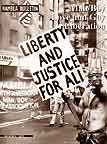
Perhaps only with the ACLU's help
Further Reading
Leader or leper?
NAMBLA, among the most closely monitored and deeply infiltrated groups in American history, has a core...
|
 |
Do rights to free expression end when a group defends sex that's illegal?
By
Tom Fuller
True to its pattern of defending the constitutional rights of the unpopular, the American Civil Liberties Union has announced that it will represent NAMBLA, the North American Man/Boy Love Association, in a
federal wrongful death suit seeking to extract a punitive $200 million from the intergenerational advocacy group. Seven persons and an Internet provider were named as codefendants in the original complaint. Robert and
Barbara Curley of Cambridge, Massachusetts, acting as plaintiffs, hope to engulf NAMBLA in legal liability for the 1997 murder of Jeffrey Curley, their ten-year-old son.
Their aim is to bankrupt and destroy the minuscule, unincorporated entity, which promotes legalization of consensual sex between men and boys. Their complaint alleges that "by its publications, meetings,
and website, NAMBLA encourages its members to rape male children," and that "NAMBLA serves as a conduit for an underground network of pedophiles in the US who use their NAMBLA association and contacts therein
and the Internet to obtain child pornography and promote pedophile activity." Its principal thrust is that the defendants' "malicious, willful, wanton or reckless conduct directly and proximately caused the death of Jeffrey J.
Curley under such circumstances that [he] could have recovered damages for personal injuries if his death had not resulted."
ACLUM, the Massachusetts chapter of the national legal resource organization, had been approached by concerned individuals soon after May 16, when Lawrence Frisoli, the Curleys' lawyer, filed
the complaint in US District Court. ACLUM Staff attorney John Reinstein assessed the merits of the case, then wrote a memo recommending that the ACLU become involved in
Curley v. NAMBLA on First Amendment
grounds. He presented the memo to ACLUM's legal screening committee, which unanimously agreed that ACLUM should take the case.
The lawsuit, whose serious constitutional implications have been widely ignored or minimized by the press, is among the most controversial cases any branch of the ACLU has handled since 1977-'78, when
its attorneys successfully represented the National Socialist Party of America, a Chicago-based neo-Nazi group, in its efforts to obtain clearance to hold a demonstration in Skokie, Illinois, a predominantly Jewish
community housing hundreds of Holocaust survivors. This devastatingly uncongenial case is now considered a landmark victory for freedom of speech and freedom of assembly. The ACLU's successful defense of those principles in
the Skokie case won renewed respect for the organization nationwide.
Moral panic
NAMBLA, founded in Boston two decades ago, has in recent years attained that rarefied level of public abhorrence reserved for neo-Nazi groups. Because it primally connects with current fears,
NAMBLA seems, in fact, to be taken more seriously, and to elicit a more visceral response, than the Nationalist Front or the Ku Klux Klan. Sources within ACLUM confirm that a number of its members have resigned in the aftermath
of the August 30th announcement that its attorneys would act on NAMBLA's behalf.
Since the late 1970s, around the time of Anita Bryant's "Save Our Children" campaign and the beginnings of child-porn hysteria, American culture has been gripped by moral panic focused on children and
sex. Fearful crimes against children now have greater longevity in the public memory, a tighter hold on the public imagination, and greater power to detonate a mob response than perhaps at any time in American history.
Recent vigilante actions and witchhunts in Belgium, Italy, and Great Britain show that the panic extends well beyond US borders.
The murder of young Jeffrey Curley was exploited politically almost as soon as it occurred. It served as fodder for the Murdoch press and countless tabloid talk shows. It fed erotophobic and
homophobic fantasies across the political spectrum, and passed into legend.
A dirty deed
By any standard, the crime was heinous. It was committed by Charles Jaynes-- then 22, a resident of Brockton, Massachusetts, employed at a Honda dealership in Newton, a Boston suburb-- and
Salvatore Sicari-- a 21-year-old sometime house painter from the Curleys' working-class Cambridge neighborhood. Both men had petty criminal records. They were described sometimes as gay lovers, sometimes as friends
with girlfriends on the side. Jaynes had reportedly attended meetings of a Boston gay youth group. The two friends knew and often hung out with Jeffrey, a mildly learning-disabled fifth-grader whose parents had separated
in 1996.
At about 3:30 pm on October 1, 1997, Jaynes and Sicari appeared in Jaynes's 1985 Cadillac and offered to drive Jeffrey to some unspecified location to pick up a new bicycle. Jeffrey got into the car.
Later, pulling into a Newton gas station, Jaynes reportedly said that in exchange for sex, he would give the boy the bicycle he'd promised and an additional 50 dollars. When Jeffrey resisted, the 250-pound Jaynes overpowered
the boy and suffocated him with a gasoline-soaked rag.
Concealing Jeffrey's body inside the trunk of the car, Jaynes and Sicari drove to an apartment Jaynes's family maintained in Manchester, New Hampshire. There Jaynes allegedly sodomized the boy's
corpse. The pair then stuffed Curley's remains into a 50-gallon Rubbermaid storage tub weighted with cement, sealed the container with duct tape, and dropped it into the Great Works River in South Berwick, Maine, just over the
line from New Hampshire.
Sicari returned to his home in Cambridge, pretending to join in efforts to find the missing boy. On October 3rd, however, Jaynes's accomplice told police that Jeffrey had been killed and identified Jaynes as
the perpetrator. After his arraignment, Sicari helped investigators pinpoint the location of the body.
When Jaynes was apprehended, Associated Press reported that Jaynes owned "pornographic material from the North American Man/Boy Love Association." Television newscasts provided hyperbolic,
salacious coverage peppered with allusions to some dark role on the part of NAMBLA. Already deafening public outcries against marauding sex predators coalesced around NAMBLA as they grew louder.
On October 4th, NAMBLA issued a press release stating, "We deeply deplore Jeffrey Curley's murder and grieve at the tragic loss suffered by his family and friends." Noting that Jaynes was said to
have possessed NAMBLA literature, the statement denied that the material was pornographic, pointed out that NAMBLA publications were "available openly in both gay and straight bookstores in the Boston area," and noted
that "if we were engaged in illegal activities, NAMBLA would have been shut down long ago." The statement stressed that "the actions of these two individuals run contrary to everything we believe in and stand for."
On October 8th, the day Jeffrey Curley's body was retrieved, a community meeting took place at the Harrington School in East Cambridge, where young Curley had been enrolled. A volatile crowd of about
500 filled the school auditorium. Soon after the meeting began, TV personnel were asked to leave. The rest of the open forum was later described by one gay attendee as "a homophobic revel with the dynamics of a lynch mob--
an outpouring of hate the like of which I've never seen."
Before the meeting escalated into chaos, speakers made passionate demands that the state restore the death penalty and ban NAMBLA. "Pressure our state legislature to declare NAMBLA and its
materials against the law!" said local City Council candidate Doug Whitlow to fierce applause. There were cries of "Hang 'em! Hang 'em!" There were calls for legislation, prosecutions, and lawsuits. When the ineffectual
moderator, recruited from Psychiatric Services at Cambridge Hospital, tried to claim that "NAMBLA does not equal homosexuality, and most abusers are heterosexuals," he was booed. One man was applauded when he yelled,
"That's nonsense! It's an abomination and you know it!"
Constantly stepping in front of television cameras, Cambridge firefighter Robert Curley, Jeffrey's father, became a vocal and ubiquitous participant in the subsequent campaign to restore the death penalty
in Massachusetts, an initiative that failed to pass the Massachusetts House by one vote. Tried separately, Jaynes and Sicari received life sentences. Sicari, the accessory who had confessed first, ironically received a
stiffer sentence than Jaynes.
Murder = jackpot?
It was some time before legal maneuvers aimed at NAMBLA were set into motion. The lawsuit against NAMBLA was preceded by related litigation launched in March 1999, a wrongful death suit aimed
at Jaynes and Sicari. The case went quietly to trial in August 2000. On August 23rd, a jury awarded the Curley family a symbolic $328 million in damages from the indigent, incarcerated murderers-- $128 million over
and above the $200 million requested. Encouraged, Lawrence Frisoli told interviewers that he hoped the judgment against NAMBLA would be "in the billions."
The Curleys' present suit rests on two points: 1) the copies of the
NAMBLA Bulletin and other publications linked to NAMBLA found in Jaynes's possession are alleged to have provided him with a blueprint
for his crime, and 2) the NAMBLA website, supposedly viewed at the Boston Public Library hours before the crime, is alleged to have inspired Jaynes to kidnap Jeffrey.
Jaynes's name was not to be found in NAMBLA's records. Mailing addresses indicate, however, that Jaynes had joined NAMBLA under a pseudonym for one year preceding March 1997, when his
membership expired. Supposedly obtaining a copy of the
NAMBLA Bulletin at Boston's Glad Day Bookstore, he had sent in $35 for a basic membership. His relationship with NAMBLA seems to have been strictly through reading
matter sent by mail. When his membership ran out, he did not renew.
None of the publications purchased by or mailed to Charles Jaynes contained how-to instructions on child rape. They did contain literary fiction of varying quality, reviews of films like
Total Eclipse, fanzine-ish articles about young actors and boy bands, discussions of a range of political issues, travel memoirs, personal essays-- some poignant, some awash in self-pity, denunciations of the present legal system, and warnings about
the consequences of breaking the law.
Except for an excerpt from an 18th-century John Cleland novella involving youths aged 16 and over, and a short story in which a man fondles an apparently sleeping boy, nothing in the material owned
by Jaynes could be labeled "pornographic." There were no sexually explicit photographs. Full nudity appeared only in occasional Beardsleyesque drawings. While NAMBLA has offered advice to men accused of statutory
rape, what Lawrence Frisoli is fond of calling a "rape and escape" manual-- a pamphlet he claims is entitled
The Survival Manual for NAMBLA Members-- seems not to exist.
The NAMBLA website (www.nambla.org), which never presented overtly erotic material, was maintained on the Web at the time of the murder by an Internet provider that later shut the site down. The
Curleys' shoddily researched initial complaint mistakenly named NAMBLA's succeeding ISP, Verio, which took down the NAMBLA website within 24 hours of being cited. The Curleys quickly dropped Verio from the suit,
replacing it with the correct ISP, now named in the suit as John Doe, Inc.
Jaynes's story about stopping at the main branch of the Boston Public Library for an Internet NAMBLA fix on October 1, 1997 is viewed with skepticism by those familiar with the BPL and its Internet
access policies. Jaynes supposedly pulled up to the curb in his Cadillac, left Sicari in the passenger seat, entered the library, swiftly accessed NAMBLA's website, obtained a few quick tips on child-snatching, grew inflamed
with lust, and returned to his car ineluctably primed to abduct, rape, and kill.
But Jaynes could not have easily parked outside the BPL, a two-building complex surrounded by bus stops and other no-parking zones in busy Copley Square. Inside the library, patrons must wait their turns
for age-restricted Internet access at one of a limited number of unfiltered computer terminals. The wait for a terminal often is more than an hour.
Whatever the actual circumstances of Jaynes's library visit, the website he is supposed to have accessed was sober and bland. Its most inflammatory content amounted to such statements as "NAMBLA's goal
is to end the oppression of men and boys who have mutually consensual relationships." The images, mostly photographs of anonymous NAMBLA members at meetings and demonstrations, were without exception innocuous.
One subpage offered a statement by the late poet Allen Ginsberg, NAMBLA's most visible endorser. The site included an essay on Walt Whitman, an academic article by Dutch politician Edward
Brongersma, and a piece called "The Politics of Ageism" by 18-year-old Michael Alhonte. There was information on membership, descriptions of various publications, and a rundown on a program supporting prisoners convicted of
illegal sex.
Was there "imminence"?
NAMBLA's position on informed consent invites dispute, but the organization has never promoted coercion or violence. In 1969, the US Supreme Court ruled in
Brandenburg v. Ohio that in order to be
legally proscribable, speech must 1) incite an imminent unlawful action, and 2) must be
likely to produce an imminent unlawful action.
Curley v. NAMBLA falls short on both points.
Since nothing published or posted by NAMBLA could be construed as a direct incitement, most civil libertarians initially scoffed at the case's prospects of success. Dr. Eric Freedman of Hofstra University
Law School, quoted in Wired News on May 21st, said that the lawsuit "is and should be going nowhere."
The lunacies of the complaint-- which claims, among other allegations, that Jaynes was heterosexual until NAMBLA converted him to boy-love-- belie Frisoli's repeated claims that "a year's research" went
into the document. Frisoli is known to residents of Cambridge as a relentlessly self-promoting failed political candidate, could not have picked a surer ticket to
Rivera Live and other talk shows, where he is a font of
such statements as "NAMBLA is... the administrative structure for child pornography."
Some observers, including a few who hesitate to take Frisoli's words at face value, have questioned whether any authentic First Amendment issues are at stake in
Curley v. NAMBLA, a civil suit that does
not hinge on any prior government intervention. The Skokie case had been about lifting an injunction preventing the National Socialist Party from holding a march. But the Curley suit does represent a use of the court system
to stifle speech and curtail freedom of association. The Curley family's victory would have the force of law.
The Curleys are, however, skating on thin constitutional ice. "Merely 'inspiring' someone to do something-- assuming the goons who killed young Curley needed any inspiration other than their twisted
minds and hearts-- is protected speech activity," says Boston attorney Harvey Silverglate, a First Amendment specialist who speaks as a nonparticipant in the case. "Were this not so," he points out, "books and movies would be
sued under similar theories. This the First Amendment prohibits."
That prohibition has not prevented activists like University of Michigan law professor Catharine MacKinnon and anti-porn crusader Andrea Dworkin from popularizing the notion of third-party liability
for crimes. Their reasoning is that authors or producers of sexually explicit or violent material should be legally responsible for crimes of sex or violence perpetrated by anyone exposed to their products. Laws facilitating
such legal action have, however, been overturned whenever they have been passed. ACLU attorney Nan Hunter has called such legislation "the Rapist's Exculpation Act," a law that would enable criminals to say. "The movie
did it"-- or the TV show, video, book, magazine, or website.
Another factor in the case is the body of jurisprudence insuring the right of free association. Frisoli has demanded that NAMBLA turn over its mailing lists. But
in NAACP v. Alabama (1958), the US Supreme Court held that the National Association for the Advancement of Colored People, or any other membership organization espousing a political cause, had a right not to disclose the names of its members. It also ruled
that without the formal involvement of the organization, crimes committed by NAACP members or supporters conferred no liability on the NAACP itself. Those First Amendment rights have been reaffirmed by
subsequent rulings.
Curley v. NAMBLA has been compared to lawsuits brought against white supremacist groups by Morris Dees and the Southern Poverty Law Center. But there is a difference between seeking damages from
an organization whose members have beaten and terrorized a pair of innocent people, as in Dees's recent suit against Aryan Nations, and seeking damages from an organization whose members have simply expressed
non-mainstream ideas. (When Dees goes after far-right groups on grounds of "hate speech," he is on far shakier footing.)
The case more closely resembles a Strategic Lawsuit Against Public Participation-- a SLAPP suit. Like litigation brought by corporations against whistleblowers, or by industrial polluters against
environmentalists exposing inconvenient facts, such suits are easily thrown out of court. They do, however, frequently achieve their primary goal of silencing or chilling speech. The expense of a legal defense, even against lawsuits
utterly lacking in merit, can impoverish individuals and drive small organizations into extinction. Whether or not this is the victory the Curleys are actually seeking, it is the only victory that may be within their reach.
If the case is not thrown out on technical grounds because of the ineptitude of the complaint, it may serve as a teaching opportunity for the ACLU. The principle that is operative behind the ACLU's defense
of the rights of NAMBLA, the NAACP, the National Socialist Party, and the Ku Klux Klan is the Voltairean ideal of defending to the death the right of others to express ideas one may find abhorrent. Adherents of both the
gay and women's movements often forget that those movements came to exist in this country through rigorous applications of the First Amendment.
As The Guide goes to press, no trial date has been set, but the judge appointed to the case, Justice George O'Toole of the US District Court in Massachusetts, has a history of principled decisions in
First Amendment cases. In 1998, deciding a lawsuit in favor of the white supremacist Nationalist Front, he wrote that "concern for public safety does not automatically justify a refusal to permit a controversial group to present
its ideas," and that it is unacceptable to regulate "protected expression on the basis of how listeners may react to it." Presumably, this is a jurist who understands the implications of a free society.
You are not logged in.
No comments yet, but
click here to be the first to comment on this
Magazine Article!
|