|
 |
Can the gay movement move beyond it?
By
Michael Bronski
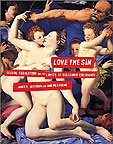
Love the Sin: Sexual Regulation and the Limits of Religious Tolerance
Janet Jakobsen and Ann Pellegrini
New York University Press
How to order
In their new book Love the Sin: Sexual Regulation and the Limits of Religious
Tolerance (New York University Press, 160 pages,
$22.95) Janet Jakobsen and Ann Pellegrini present a fresh way to look at the problem of
arguing for gay rights and also sexual freedom. Even more interesting, the template they've created can also work for a whole range of other social and civil liberties.
Jakobsen and Pellegrini contend that sex is a social good, not just a private matter. Basing an argument for gay rights (or anyone else's) by appeals to "tolerance" is ultimately self-defeating, they say. And religion (especially the various forms of American Protestantism)
is so intertwined with US law that the battle for gay rights is inseparable from the battle for religious freedom-- a "freedom" that they repeatedly remind us also includes the freedom not to believe.
These notions run counter to the strategy employed by the gay rights movement over the last four decades. The battle for equal rights under the law-- namely employment non-discrimination measures and the repeal of sodomy laws-- has been waged in courts by appeal
to the right to privacy and equal-protection. Meanwhile, activists have lobbied legislators-- as well as the general public-- with the line that gay people are no different from anyone else. This, coupled with the argument that sex has nothing to do with gay identity, has been the
mantra of all the major gay and lesbian groups.
Just do it
But these strategies, Jakobsen and Pellegrini argue, will never work in securing civil rights. First, the idea of seeking "tolerance" for a minority is profoundly anti-democratic. Second, if queers are successful in winning the right to privacy they will have done nothing more
than win the right to keep themselves outside the public sphere. Finally, arguing that gay identity has nothing to do with sexuality-- which is the strategy employed (albeit successfully) in
Romer v. Evans-- in which the US Supreme Court struck down a Colorado law that banned
anti-gay discrimination laws-- denies gay people their full dignity as human beings. Jakobsen and Pellegrini argue that queers need not only the right to "be gay" but the right to "do gay." In other words, identity is meaningless without the ability to act in any number of ways that
manifest that identity.
Jakobsen and Pellegrini's ideas about tolerance feel counterintuitive-- after all, isn't it a good thing? Well, not as they present it. The gay rights movement-- as well as the mainstream and gay media-- uses the metaphor of tolerance all the time: gay people are
seeking "tolerance," or heterosexual American is becoming "more tolerant" of gay people. In Jakobsen and Pellegrini's view, however, this use of language reinforces the idea that gay people are a separate, distinct minority that needs the kindness and the benevolence of heterosexuals
to become full citizens. Basic civil rights becomes thus an act of charity. The battle for gay rights would be better served, they say, if it were framed as a struggle for full citizenship under the legal precepts of a democracy.
But democratic freedom is out of reach for gay people if our courts rely on theological ideology rather then US law when judging cases of gay rights. The best example of this comes from the US Supreme Court's decision in
Bowers v. Hardwick. Here, the court explicitly
stated that "condemnation of [sodomy] is firmly rooted in Judeo-Christian moral and ethical standards," and that "to hold that an act of homosexual sodomy is somehow protected as a fundamental right would be to cast aside millennia of moral teaching." Jakobsen and Pellegrini argue
that religion is at the heart of much anti-gay sentiment-- and that this connection has to be challenged. But they are not arguing for religion to be banished from public life-- as if this were possible. Rather, they contend that the gay rights movement should argue for a far broader
notion of religious freedom that includes the freedom not to believe in what the US Supreme Court termed "Judeo-Christian moral and ethical standards."
Angels on pinheads?
While much of what Jakobsen and Pellegrini argue has the academic's aura of hypothesis-- arguments about the "ideal state" are not going to win Constitutional arguments-- much of what they say has practical use for the gay rights movement. The issue of privacy--
verses the right to be gay in public-- has long been problematic for activists. Not only does emphasizing privacy limit citizenship (if you can't be safe acting "gay" in public because you are afraid of getting beaten up, you are not really a full citizen) but it's sometimes not even
granted: remember John Lawrence of Lawrence v.
Texas was arrested in his own bedroom for having sex with another man. Keeping this in mind, Jakobsen and Pellegrini argue that while privacy is an important constitutional principle, it alone doesn't really get to the heart of the issue--
which is that a democracy should foster all forms of freedom-- not only freedom of association, freedom of speech, freedom of religion, freedom of conscience-- and sexual freedom. "[S]exual freedom is the freedom to form human relationships," they write. And you can't have
homosexual relationships without having the freedom to have homosexual sex.
Faith is central
Love the Sinner may be a hard sell for many gay people. Not only will those who believe in the advantage of using "tolerance" find their thinking questioned, but also queer radicals and secularists who would rather demonize religion-- or just not think about it. Jakobsen
and Pellegrini make a claim for a broader concept of religious freedom, and seek to place religion in the spacious context of American life and politics. "The problem is not religion, per se," they note. "After all... progressive politics in the US has not always been uniformly 'against'
religion." Just think of the rich history of progressive movements for African American civil rights that were grounded in the black church, the efforts to gain economic justice spawned by the Catholic Worker movement in the US. The problem with religion in America, they argue, is
the domination of a certain type of Protestantism obstructing true freedom for a wider range of belief.
There's no doubt that the gay rights movement has been successful over the past 50 years, but any movement for social change needs to be challenged from within.
What Janet Jakobsen and Ann Pellegrini have done here is to give the gay rights movement a decidedly powerful kick-in-the-pants to get it thinking-- and arguing-- in new ways.
| Author Profile: Michael Bronski |
|
Michael Bronski is the author of
Culture Clash: The Making of Gay
Sensibility and The Pleasure
Principle: Sex, Backlash, and the
Struggle for Gay Freedom. He writes
frequently on sex, books, movies, and
culture, and lives in Cambridge,
Massachusetts. |
| Email: |
mabronski@aol.com |
You are not logged in.
No comments yet, but
click here to be the first to comment on this
Book Review!
|