October 2008 Cover
|
 |
Surprises from the historical bookshelf
By
Michael Bronski
Long Before Stonewall: Histories of Same-Sex Sexualities in Early America
Edited by Thomas A. Foster
How to order
American Psychiatry and Homosexuality: An Oral History
Edited by Jack Dresher and Joseph P.
Merlin
Harrington Park Press
How to order
The presidential elections loom -- time to wake from lazy, vacation-laden rest and begin to realize that queer issues will play a tiny, probably negligible, role in what may be the most important presidential election in 30 years. On the plus side, the massive economic woes the Bush administration have placed on the country may well overwhelm the right's usual homophobia-filled venom -- queer marriage takes second place to being able to pay your mortgage. On the other hand no one -- McCain certainly not, and neither Obama -- has addressed any issues that concern GLBTers. So we are, politically, at least, invisible yet again. That is why this month is a good time to think about gay history and the real effects that queers and queer activism has had not only on the political process but on queer people's actual lives. Here are two books that may startle you back into thinking that queer lives and queer activism matter, maybe now more then ever.
Long Before Stonewall: Histories of Same-Sex Sexualities in Early America (New York University Press, 403 pages, $24.95) is edited by Thomas A. Foster, whose Sex and the 18th-Century Man: Massachusetts and the History of Sexuality in America is now a foundational work on understanding how America became queer. This collection of 14 essays -- all readable and all accessible to a non-academic audience -- charts the incredible and vitally important variations of sexuality and sexual behaviors in the years preceding and just after the American Revolution. So many of these pieces challenge and force us to rethink sentimental and historic platitudes.
For instance, Ramon A. Gutierrez's "Warfare, Homosexuality, and Gender Status Among American Indian Men in the Southwest" is a radical revision of how some tribes treated the berdache. Since Stonewall, the berdache -- a "third sex" in many native tribes -- was discussed as a progressive anti-gender binary, queer category. But Gutierrez describes here how some tribes used berdache as sex slaves to mitigate tensions between the tribe's more powerful men -- a different view of an institution that has taken on a pivotal place in queer history and imagination.
"Border Crossings: The Queer Erotics of Quakerism in 17th-Century New England," by Anne G. Myles, presents us with a new view of Quakers in the colonies (and England for that matter). While we think of Quakers now as one of the most modest, proper, and constrained of denominations, Myles reminds is that in the late 1600s they were viewed as gender revolutionaries -- wo- men could speak at meetings, men were forbidden to fight or carry weapons, and their rejection of religious and political hierarchy was seen as a rejection of gender roles. Indeed, anti-Quaker propaganda was often filled with the most lurid insinuations and claims -- including sodomy and bestiality -- of the sect's sexual practices.
Over the past 30 years, gay politics has coagulated into a series of tidy platforms and platitudes. Foster's diverse collection forces us to re-consider accepted sexual and political ideas -- and maybe try to come up with some new answers.
American Psychiatry and Homosexuality: An Oral History, edited by Jack Dresher and Joseph P. Merlin, (Harrington Park Press, 299 pages, $19.95) is a fascinating series of interviews that chart the internal maneuvering and fights that happened when queer psychiatrists, therapists, and activists took on the American Psychiatric Association to remove homosexuality from their Diagnostic and Statistical Manual of Mental Disorders (DSM). It's a truism to say that America is a therapy-obsessed society and that the medical professions have been given, or taken, far too much cultural and political power, but this books reminds us that this power -- like all power -- is vulnerable. While much of the material here is spoken by people who have a deep commitment to psychiatry and psychoanalysis, even as they see its flaws and shortcomings, the power of the narrative is how men and women from the inside of a repressive organization could find it within themselves -- and with the inspiration and help of outside activists -- to challenge one of the most accepted lies -- that homosexual desire and behavior was a mental disorder -- and completely change the "official" thinking on the topic: truly remarkable.
Gertrude Stein wrote: "Let me recite what history teaches. History teaches." As usual she is right. History does teach us lots of stuff, but we have to be willing not only to listen -- and read about -- but think about what it all means as well.
| Author Profile: Michael Bronski |
|
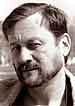
Michael Bronski is the author of
Culture Clash: The Making of Gay
Sensibility and The Pleasure
Principle: Sex, Backlash, and the
Struggle for Gay Freedom. He writes
frequently on sex, books, movies, and
culture, and lives in Cambridge,
Massachusetts. |
| Email: |
mabronski@aol.com |
You are not logged in.
No comments yet, but
click here to be the first to comment on this
Book Review!
|