|
|
 |
That was the role Hollywood often cast queers in 1997
By
Michael Bronski
So, here it is the end of the year and time for those "year-in-re view wrap-ups." For gay audiences-- who have learned to expect so little after being promised so much-- these are tricky. Do you tout: "Great
news, gay characters appeared in 16 small, demeaning roles this year in Hollywood films. Things are looking up!" Or do you focus on the negative: "Straight audiences flocked to see
In and Out, but basically didn't get it. Often
the good and bad news doesn't seem all that different. But what is this year's notable positive trend is simply the numbers of homosexual characters in movies. Of the 157 films I saw this year, 43 featured queer themes,
major characters, or important minor ones. During 1996, there were a scant 15 movies in which homosexuals surfaced on the shimmering screen. But, raw numbers aside, was 1997 a better year for friends of Dorothy?
It depends on your measure. Simply totting up figures does not indicate the films'
content, political or artistic. In the past, discussion of queer films has focused upon whether or not a movie was "good for
the gays." The Gay and Lesbian Alliance Against Defamation (GLAAD) trumpeted a victory this month after they persuaded the director of
The Jackal to reshoot a scene in which a gay man, played by openly gay actor
Stephen Spinella, is murdered by professional assassin, played by Bruce Willis. Audiences attending
Jackal sneak previews apparently cheered when Willis casually unloads his high-powered handgun into the gay man's chest.
Now, the image of movie-goers applauding the death of a gay men is disquieting. But was GLAAD's effort ultimately useful? In the re-edited version, GLAAD claims it's now clear that Spinella's character
is killed not because he is gay, but because he has figured out that Willis was a hit man. Well, actually
The Jackal is such a mess that we never really know why Willis has flirted his way into the man's apartment to begin
with. And secondly, we are still left with the barely sketched-out image of a gay man-- defined only by his big office, fancy house, and eagerness to find a date-- being offhandedly murdered. Spinella does not play a gay
character, he plays a plot device. GLAAD's protest may raise Hollywood's consciousness about gay issues an iota or two, but
The Jackal is so stupid and badly done a movie that it does no one-- gay or straight-- any good.
For a generation, GLAAD's stance against "negative images" has been widely accepted. But is it time to move beyond this? Earlier this year, GLAAD issued a statement condemning-- as an anti-gay
stereotype-- Christopher Guest's performance as Corkey St. James, the ultimate theater queen, in
Waiting for Guffman. Reaction from the filmmakers and the gay community was quick: this was insane. Guest's performance was
witty, fully-realized, and moving. The film treated Corky-- and its other theater-inflamed characters-- with respect and dignity. So intent was it on condemning "negative images" that GLAAD failed to recognize a
performance showing the depth of gay men's lives and experiences.
Gay male characters have always been more visible on movie screens than lesbians, but this year, manifestations of the male homoerotic have taken a curious turn. Gay male characters appeared in more the
25 films this year and took a variety of forms. Here are a few: Stanley Tucci's surprise-ending closeted husband in
Day Trippers; Ewen McGregor perfectly nude, pretty-boy-as-blank-page in
Pillow Book; Kevin Spacey's slyly closeted cop in
L.A. Confidential; and John Hurt's aging British novelist who goes ape for a boy pop star in
Love and Death on Long Island. Film's like
Full Speed, Boyfriends, Happy Together, Shooting Porn,
Nowhere, and Latin Boys Go to Hell all sported major gay themes.
But most striking of all the films was that 1997 seemed to be the year of the queen. Not the drag queen
(ą la The Birdcage or Too Wong
Foo... of past years), but the visible, identifiable-- and yes, maybe
by GLAAD's standards, stereotypical-- gay man: Kevin Klein in
In and Out, Christopher Guest in Waiting for
Guffman, Rupert Everett in My Best Friend's
Wedding, John Ritter in Sling Blade, Anthony Barrile in
Kiss Me Guido, Kevin Spacey in Midnight in the Garden of Good and
Evil, Robert Downey Jr. In One Night
Stand, Alexis Arquette in Never Met
Picasso, Clive Owen in Bent.
In traditional Hollywood iconography, identifiable gay queens-- were offered up as comic relief: the witty best friend, the foppish artist, the silly hairburner. Occasionally a
serious film might include a gay character, but he would always be, as the ads say, "straight-acting and appearing." What amazes about this year's "queen" films is not simply their plentitude, but that their gay characters are consistently the moral centers
of the films. We are supposed to root for Klein's coming out in
In and Out. Everett's truth-speaking best friend is the moral balance to Julia Roberts's selfishness in
My Best Friend's Wedding. John Ritter is the focal point of
love and caring in Sling Blade. Robert Downey Jr. is the only grounded person in
One Night Stand. Even Kevin Spacey's duplicitous social climber in
Midnight in the Garden of Good and Evil has more moral complexity
than anyone else in the film.
Male bonding sans homophobia
These depictions of gay men are unprecedented in Hollywood films-- which too often reflect a culture in which gay people are not considered moral, never mind moral anchors. Has Hollywood become
so uninfatuated with heterosexuality that gay men-- though not lesbians-- are now models of moral rectitude? In juxtaposition it is interesting to note that this trend has been accompanied by an upswing in straight male
bonding films. You can't miss the visceral homoerotic subtexts in these:
Donnie Brasco, The Company of Men,
Box of Moonlight, The Full Monty, and even the
faux-dyke GI Jane. There have always been male-bonding films, but
gay critics have argued that they were closeted manifestations of homosexuality in the absence of out, fully realized gay characters.
What does it mean that we now have both openly gay themes
and homo-closeted male bonding films? And what does it mean for a critical politics, like GLAAD's, that focuses on the idea of "negative
images"? In the past gay male characters who were "obviously gay" were experienced by many gay audiences as stereotypical, and regressive. But gay audiences to films like
Waiting for Guffman prove that is no longer the case. In
his In and Out, screenwriter Paul Rudnick consciously plays with, almost taunts us, with the very concept of a stereotype-- Kevin Klein's character is defined as gay because he
does love Barbara Streisand, and because he
dances well and waves his hands in the air. Rupert Everett's suave, urbane, and clearly gay affect in
My Best Friend's Wedding reads to gay and straight audiences as a good thing. Would this have been true five years ago? Will
it-- could it-- ever be true of lesbian characters?
GLAAD's retraction of their criticism of
Waiting for Guffman is perhaps a turning point. We are more sophisticated then ever, and less simply reactive. We are better able to look at the complexity and
endless variation of gay life and not worry all that much about what straight people will think. It would be nice to think that we expect more from movies-- although the popular success of such awful duds as
Kiss Me Guido signals that that moment is not yet upon us. Movies mirror our lives as well as point the way to the future. In the end we may find that our politics about movies is more driven by our pleasure and enjoyment of them then the
other way around.
| Author Profile: Michael Bronski |
|
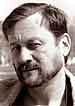
Michael Bronski is the author of
Culture Clash: The Making of Gay
Sensibility and The Pleasure
Principle: Sex, Backlash, and the
Struggle for Gay Freedom. He writes
frequently on sex, books, movies, and
culture, and lives in Cambridge,
Massachusetts. |
| Email: |
mabronski@aol.com |
You are not logged in.
No comments yet, but
click here to be the first to comment on this
Movie Review!
|