
February 2004 Cover
|
 |
Film's best moments last year
By
Michael Bronski
The Trip
Directed by Miles Swain
How to order
The Swimming Pool
Starring Charlotte
Rampling, Ludivine Sagnier
Directed by François Ozon
How to order
The Hours
Starring Nicole Kidman, Julianne
Moore
Directed by Stephen
Daldry
How to order
Pirates of the Caribbean
Starring Johnny Depp, Geoffrey
Directed by Gore Verbinski
How to order
How to order
Angels in America
written by Tony Kushner
How to order
American Wedding
Starring Jason Biggs, Seann William
Scott
Directed by Jesse Dylan
How to order
The contemplation and cataloging of the year's best, or worst, queer films is often an exercise in masochism, or at least melancholia. 2003's queer movies were probably no better or worse than recent years'. The exception being, of course, HBO's production of Tony
Kushner's Angels in America-- hands down one of the best queer movies of the decade. As does all great cinema,
Angels forces us to think outside categories. Beautifully acted, written, and directed,
Angels in America is by far the most intelligent, sophisticated, and
emotionally-wrenching gay film in years. Of course, great films are always rare, and we don't have a long list of great queer films-- most recently:
Boys Don't Cry, Gods and Monsters, High Art, Silverlake
Life-- but they do set a standard by which others are judged.
Not taking them as totalities, many 2003 gay films had scenes, even performances, that were sublimely wonderful. So, in relatively ascending order, follows the best scenes from queer films-- and sometimes the best queer scenes in non-queer films:
· Camp was generally an awful mess. But at movie's end-- after much flirting-- the gay, drag-queen character finally tells the cocktease-straight-boy off, only to have the straight lad accept blame and admit he just does it to get attention because he's lonely. It was a
startling and moving moment.
· Francois Ozon's The Swimming
Pool was a sorry mess-- with the exception of one scene: involved in a complicated, erotic, and competitive relationship with her male lover's daughter, Charlotte Rampling indulges in a sexual fantasy of seducing her borrowed
villa's gardener by luxuriating naked on her bed. The moments of the naked Rampling-- completely comfortable in her age and her sexual allure-- are some of the queerest and sexiest in films this year.
· The Trip-- the picaresque tale of two men who are in and out of love from the late 1960s to the 1990s-- is mostly a mess. But by the end of the film, when one man is dying of AIDS and his former lover returns, the accumulation of haphazard emotional details
finally pays off. This is a death scene that really hits home.
· The Hours-- much touted and certainly admirable-- wasn't very messy. Indeed, it offered up many potent moments thanks to terrific acting. But perhaps the most startling comes when Meryl Streep tells the dying Ed Harris he should just be happy to be alive, and
Harris-- who looks very much like a person with AIDS-- turns on her. It's a startling moment not just because of how completely understandable her position is (she loves him as a soulmate) but because of Harris's vigorous, scornful reaction. It's rare that the conflictive emotions
connected with AIDS get so powerfully represented.
· While Pirates of the
Caribbean goes on messily too long, and a subplot about un-dead pirates is silly, it does feature Johnny Depp dripping in mascara and attitude. As a laconic and louche buccaneer, Depp has more queer sensibility than any five gay films of
this year put together. Alternating between drag-queen blasé and pirate-king flamboyance, every scene here with Depp is near perfect.
· The American Pie series has always been a surprise. Not a frat-boy comedy, but a witty-- and sometimes feminist-- look at growing up, the series has climaxed messlessly with the third installment:
American Wedding. As with the prior films, there's much to
enjoy here, but by far the best scene is Steve Stiffler's performing a dance-off at a Chicago gay bar. Over the course of the series Stiffler has becomes a great American comic character-- somewhere between Falstaff and a rutting goat. Vulgar, self-indulgent, vain, hyper-sexed,
and determined to get laid, Stiffler is American male sexuality.
While none of these films are perfect, they all provide chewy scenes with an array of pleasures. And maybe that's about all you can ask for these days at the movies.
| Author Profile: Michael Bronski |
|
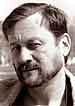
Michael Bronski is the author of
Culture Clash: The Making of Gay
Sensibility and The Pleasure
Principle: Sex, Backlash, and the
Struggle for Gay Freedom. He writes
frequently on sex, books, movies, and
culture, and lives in Cambridge,
Massachusetts. |
| Email: |
mabronski@aol.com |
You are not logged in.
No comments yet, but
click here to be the first to comment on this
Movie Review!
|