|
 |
By
Mitzel
I was thinking about my dear late mother. I recalled that several years ago, she called me and wanted to have a serious chat about "our family's alcoholic gene." I listened carefully and
made some comments. Mother's father, whom I never met, had had his business ruined by the Crash of 1929, went into bankruptcy, fell into the bottle and never got out. He died in his 50s,
as much of a broken heart as alcohol addiction. Mother never really spoke to me in depth about her Dad.
On another occasion, Mother called to talk about "our family's depression gene." This one I didn't get at all. I have known depressives, and I have seen none of this behavior in my
immediate family. Mother had, for decades, taken a little afternoon nap around 3 p.m., and she was afraid this might be indicative of the blues. I assured her that napping was completely in the
range of normal -- especially when young or old. Perhaps Mother had been watching too many Oprah Winfrey-type gab shows. But then it dawned on me that what Mother was trying
to communicate -- she often talked on two levels -- was the recurring patterns of behavior in those genetically related, manifesting themselves in ways overt and subtle. It's a subject
worthy of serious meditation.
T
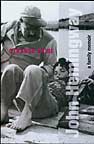
his all came to mind as I read the new book by John Hemingway,
Strange Tribe: A Family Memoir. John is the son of Gregory, who was the third and youngest son of Ernest. When I
finished the book, it was clear that gender confusion and suicide are central factors in the lives of the male (and perhaps female) Hemingways. The sobriquet, "strange tribe," came from
Ernest himself.
The Hemingway story has been well mined. It's very disturbing -- hardly "Father Knows Best." The animosities and character distortions which develop from family influences last a
lifetime, perhaps for most with diminishing effects. I've never been a parent, so I cannot judge, only observe.
John H. writes about his Dad: "it wasn't too hard to guess at the nature of the numerous beasts that had tormented him for most of his life. He was a manic depressive, he
cross-dressed, and eventually he had a sex-change operation. He drank and got into fights, did time in jail, but more than anything else, he missed his father terribly. Missed him and hated him at the
same time. Hated him and blamed himself for Ernest's suicide in 1961."
For those of you not around in 1961, Ernest Hemingway's suicide -- rifle blast in the mouth in Idaho -- roiled the headlines as nothing else had, until, of course, the mysterious death of
Marilyn Monroe and, a year later, that gunfire in Dallas, Texas on 22 Nov.
Suicide and the Hemingways. Ernest's father had killed himself. Ernest's brother and sister were suicides. Ernest too. I think one of his sons as well. Granddaughter Margaux, the striking
and big-boned (and slightly androgynous) model, committed suicide on 01 July 1996, the day before the 35th anniversary of her Grandpa's suicide. This is real estate very near the House
of Atreus, psychologically sub-prime.
Ernest was born in 1899. His mother attired him in girl's garb until he was a lad. She let his hair grow long and she combed it again and again. In many of Hem's novels, there are scenes
with long and semi-sensuous hair-brushing. Ernest wound up hating his mother. Not a good rung to climb the ladder of life. He married four times. Had one son with Hadley (wife #1), two
sons with Pauline, an heiress (wife #2), and none with his two subsequent wives. Gregory, the last one, Hem hoped would be a girl. Ernest's nickname for Greg was Gigi, pronounced "Giggy."
Greg was 11 when Ernest walked into his room and found Greg trying on his mother's stockings. Papa was not pleased. By that time, Ernest had transformed himself into the
hypermasculine macho man which made him famous. No more girl's clothes for him! Ernest seemed to have followed a trail very much like that of Theodore Roosevelt, who was also raised in girl's
clothes and then turned into a punchy masculinist egotist, shooting all those animals. I recall that Gore Vidal, in his essay on TR, warned that you better watch out "when you give a sissy a gun."
Gregory Hemingway also married four times. He also disliked his mother, Pauline. When Pauline died, her two sons decided not to pay for a headstone on her grave. Gregory Hemingway
had a bad end. He was arrested in Dade County, aside a road, perhaps in his cups, while changing into female attire. The arresting officer asked his name. First it was Gregory. Then
Gloria. Hemingway was taken to the prison and the next day he expired. It is unclear why, perhaps a cardiovascular event.
There's a price to being famous. This is an old story. For the Hemingways, there has been a very big price.
What I've always found interesting is that Mary Hemingway, Ernest's 4th, became best buds with Jack and Jackie Kennedy, and when the Kennedy Museum and Library opened in
Dorchester, Massachusetts, the Ernest Hemingway Collection was added to the Kennedy Collection -- on a separate floor, of course. But don't the Ks have their own curse? I've always regarded this
odd I.M. Pei building on a distant land jag on the Boston Harbor as the Curse Center -- a saturation of assassination, suicide, and sadness.
You are not logged in.
No comments yet, but
click here to be the first to comment on this
Common Sense!
|