September 2001 Cover
|
 |
At the last turn of the century
By
Michael Bronski
Houdini, Tarzan, and the Perfect Man: The White Male Body and the Challenge of Modernity in America
John F. Kasson
Hill and Wang
How to order
"Me Tarzan, You Jane. Me White, Me Better." Well, that isn't exactly verbatim from Edgar Rice Burroughs's 1914
Tarzan of the Apes, but it might as well have been. The news that Tarzan only got to be the great white father
hero is not new. (Watching how the Hollywood films changed over the years-- from overtly disregardful of their native African characters to lauding them as more heroic than Tarzan-- it's clear that even Tinseltown producers
caught on to the films' subtexts.) But this is only one of the points that John Kasson makes in his wonderful and engrossing look at how white maleness-- and by extension femaleness and queerness-- were invented and manufactured
at the turn of the century.
The Ape Man is Kasson's final example-- and, while illuminating, his least groundbreaking. Earlier in the book, he examines the lives and careers of two other popular cultural icons who had as much influence on how
we think about men then and now. The first is Eugen
Sandow, a late-Victorian strongman and physical culturalist who virtually invented what we now call body-building and gym culture. Although he got his start in Great
Britain, Sandow became famous in America when he toured with Ziegfeld's Follies and was presented as "the perfect man."
Sandow was emblematic of male physical perfection and racial purity, as well as illustrative of (British) nationhood. While he was billed as "the strongest man on earth"-- a moniker that worked well on the vaudeville
stage where he would performs authentic, if slightly grandiose physical feats-- Sandow also marketed another cultural value: near-naked male beauty. While ancient Greek statuary had long been admired in museums, Sandow
was beauty made flesh and made accessible. Part of his income-- aside from a chain of "physical culture centers" (i.e., gyms) he opened and a "physical culture" magazine he published-- were "studio cards." These carefully
unclothed photographic studies were sold after his shows and on newsstands. Sandow-- well, his body-- was both a celebration and commercialization of male beauty and sexiness. His career, particularly the studio cards, were the
beginnings of commercialized gay male porn, for although they were probably purchased by as many women fans, they were also used my men as "models" upon which to form their own bodies.
Escape this
Kasson's second example of preeminent masculinity performed quite a different feat. Ehrich Weiss was born to a poor Jewish family in Budapest in 1874, but after moving to America, designing a series of
audience-pleasing physical feats, and repackaging himself, he became world-famous as Henry Houdini. If Sandow represented unbridled masculinity to the masses, Houdini played to a different fantasy. Here was man enchained-- literally--
but always managing to escape and free himself. Enacting a repetitive, but powerful dream of the popular unconscious, Houdini allowed himself to be encased in chain-wrapped trunks, locked into water-filled glass cases,
handcuffed, straitjacketed, and generally bound-up-- only to find the strength and the ingenuity to release himself. He represented to his fans the survival of the male body in an age when it faced unprecedented threat from the state's
imposition of more and more control over the individual and, after 1918, from the incredible assault on the male body that occurring in The Great War.
Kasson garners an impressive array of documentation to prove his points-- vaudeville programs, newspaper reports, personal letters, autobiographies, and lots of photographs-- and he maps out a convincing argument
that these pop-culture figures had a lasting impact on American culture. But along with these constructions of new types of masculinity, he also examines how alternative masculinities were also being made.
As Houdini was gaining fame as a hyper-masculine escape artist, Julian Eltinge was equally famous as a female impersonator both in vaudeville and on Broadway. (He was so well-known that he had a Broadway
theater named for him in 1912.) Completely entrancing and confusing audiences with his "ambidextrous" abilities, Eltinge-- who began life as William Dalton-- pushed the boundaries of how audiences thought about gender on-stage
and off. Men marveled at his beauty, while women came to the show, they claimed, for fashion tips. If Houdini, trained as a magician, performed physical magic, Eltinge escaped from masculinity
into femininity with the same ease. While his promotional material described him as a he-man and an avid ladies man (neither particularly true), Eltinge provided a curious trap-door to the more standard and restrictive notions of masculinity that were offered
by Sandow and Houdini.
In an age where Brad Pitt, Keanu Reeves, and Leonardo DiCaprio have replaced the more stalwart popular icons of masculinity, and one-time tough-guy Bruce Willis has turned in his best performance ever in
The Sixth Sense (playing a sensitive, moody, and dead child psychoanalyst), we're clearly still dealing with how to be a man in this world. Kasson's book-- with its wealth of data and its smart, witty analysis-- is a great way to begin to figure
out how we got to where we are, even if we still don't quite know where we're going.
| Author Profile: Michael Bronski |
|
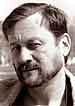
Michael Bronski is the author of
Culture Clash: The Making of Gay
Sensibility and The Pleasure
Principle: Sex, Backlash, and the
Struggle for Gay Freedom. He writes
frequently on sex, books, movies, and
culture, and lives in Cambridge,
Massachusetts. |
| Email: |
mabronski@aol.com |
You are not logged in.
No comments yet, but
click here to be the first to comment on this
Book Review!
|