|
 |
An American tradition
By
Michael Bronski
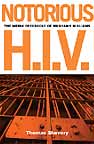
Notorious HIV: The Media Spectacle of Nushawn
by Thomas Shevory
University of
Minnesota Press
How to order
Americans are notorious for their short, scant historical memories. So it's no surprise that "news stories" often break big, hit the headlines, spread like wildfire, and then die out quickly
only to go into history's trash bin-- no matter how much damage they caused along the way. A virulent case in point is that of Nushawn Williams, a 20-year-old year old African-American
man accused in 1997 of intentionally infecting hundreds of women and girls with HIV in a small, economically depressed town in New York State. The fact that Williams was a small-time
drug-dealer and regularly traded sex for crack only added fuel to the fire. Once the Williams story hit the media it went out of control.
There was little truth in the details. Williams was indeed HIV-positive and he did have unprotected sex with some women. All the sex, however, was consensual (though because a
few girls were under the age-of-consent, the sex became "rape"). The media quickly made Williams into a monster. From trash TV shows to the
New York Times, reports were rife with
extreme misinformation. Prosecutors with no connection to the case asserted that Williams should be tried for first-degree murder. Williams became the national poster boy for the dangers
posed by black men, drugs, sex, and AIDS. In the end Williams was sentenced to six-to-12 years for a drug charge and two counts of statutory rape. He, and his case, are now mostly forgotten.
Thomas Shevory's Notorious HIV is a stirring analysis of the case, showing how it could spin so out of control so quickly and dangerously. He invokes the concept of a "moral
panic"-- a term coined by British sociologist Stanley Cohen in his 1962 book
Folk Devils and Moral Panics-- to describe what happens when a society rallies around the demonization of a person
or a group in response to a perceived (almost always imagined) threat. Cohen's case study was the minor clash between "mods" and "rockers" in a British seaside resort in the 1960s,
but "moral panics" have a long history in America (starting with the Salem witch trials), and in today's age of hypermedia have become seemingly continuous and institutionalized.
Shevory also discusses such crucial background topics as the integral mythological place the "small town" occupies in the American imagination, the sordid history of drug laws in
New York State, and how societies have criminalized people suspected of spreading disease, from the bubonic plague to HIV.
Shevory takes Notorious HIV one step further and writes about his own relationship with Williams, established while the book's central figure was in prison. These sections
fascinate, giving more insight into Williams's mind than anything else available. Williams was guilty of crimes and misdeeds, but Shevory's portrait is complex. Williams understandably presents his
own version of his life as the truth, and is angry with what he sees as distortions. Shevory provides counter-interpretations, both in and against Williams's favor. Williams's life in prison is,
not surprisingly, miserable, and he can be wheedling and manipulative to make it better. Shevory's agenda here is not to exculpate his protagonist or to excuse behaviors that were
destructive (to both himself and at times others), but to understand who he is and how he got to where he's ended up.
We're left with an uncomfortably complicated look at how one-- far from perfect-- man was railroaded into being a monster-- a monster who existed only in the dreams and the
anxieties of those who needed one to make the world make sense.
| Author Profile: Michael Bronski |
|
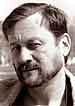
Michael Bronski is the author of
Culture Clash: The Making of Gay
Sensibility and The Pleasure
Principle: Sex, Backlash, and the
Struggle for Gay Freedom. He writes
frequently on sex, books, movies, and
culture, and lives in Cambridge,
Massachusetts. |
| Email: |
mabronski@aol.com |
You are not logged in.
No comments yet, but
click here to be the first to comment on this
Book Review!
|