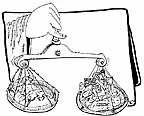
Out of whack?
|
 |
Is the ruling all it's cracked up to be?
By
Bill Andriette
Six grim, black-robed, apparently
sexless judges put spring in the step
of American gay pride marchers this
year. This was the US Supreme
Court majority that prevailed in the
6-3 decision, handed down June
26th, overturning laws against
same-sex sodomy.
The ruling in Lawrence &
Garner v.
Texas, struck down the Lone Star
State sodomy law, and essentially
overturns the widely despised
precedent set in 1986 in
Bowers v. Hardwick-- when
the court had ruled 5-4 that
criminalizing gay sex was "firmly
rooted in
Judeo-Christian moral and ethical
standards." Last month's decision
closes the book on an American
tradition of prosecuting sodomy--
and occasionally executing people
for it-- that goes back to Puritan
times. By the logic of the majority's
ruling, as a bitter dissent observed,
the high court may
offer notable sequels-- perhaps
ending exclusion of openly-gay
people from the military, allowing for
stronger anti-discrimination
protection, and even gay marriage.
The majority opinion, penned
by Justice Anthony Kennedy opens
with an
oomph like Beethoven's Ninth.
"Liberty protects the person from
unwarranted government intrusions
into a dwelling or other private
places," he writes.
While gay people are still
humming along to its music, the
majority decision also strikes some
sour notes. It's not clear the justices
who signed on really know their
score. Do they really believe its
high-flown principles, or just find
them convenient to say?
And peer into the ruling's logic
and circumstances, and this legal
triumph-- perversely-- reveals itself in
part as a product of a steady march
of sexual repression in America
since
Hardwick. It's as if only by the
light of the bonfires of our latter-day
witch-hunts could the
Supreme Court find its path to
deciding right about sodomy. The
court came to its proper conclusions
in part by making invidious
distinctions between homosexuals
who should be left alone in their
homes, and others who deserve to
become permanent wards of Big
Brother.
Still, in these post-Patriot Act,
permanent War-on-Terror times, it's
a balm to hear a high official of the
global hyperpower assert that "In our
tradition the state is not omnipresent
in the home."
"And there are other spheres
of our lives and existence," Kennedy
continues, "outside the home, where
the state should not be a dominant
presence. Freedom extends beyond
spatial bounds. Liberty presumes an
autonomy of self that includes
freedom of thought,
belief, expression, and certain
intimate conduct. The instant case
involves liberty of the person both in
its spatial and more transcendent
dimensions."
Imagine-- a Supreme Court
majority calling anal sex-- and
heaven knows how right they are--
"liberty in transcendent
dimensions"? No wonder the
winning opinion provoked outrage
from the Court's hard-right,
authoritarian wing. Antonin Scalia
wrote his dissent in sulfuric
ink, saying his confreres had put
themselves in the hock to "the
so-called homosexual agenda."
Hotting up the rhetoric on both
sides was a sense that the matter at
hand was at root symbolic. That
sense was widely shared, not least
by the gay groups who fought to
overturn
Hardwick, for whom the
biggest hurdle was actually finding a
sodomy arrest with which
mount a challenge. Texas came to
the rescue. When Houston police, on
reports of a weapons violation, burst
into an apartment, they found John
Lawrence and Tyrone Garner having
anal sex. The weapons accusation
was erroneous, but Garner and
Lawrence were arrested, forced to
spend the night in jail, and fined
$200 each. They challenged their
prosecution.
No sex please, we're
proud
Fighting sodomy laws has not
loomed large on the agenda of
America's big lesbigay groups.
Campaigns to fight for legal
butt-fucking don't have the requisite
bland, creamy mouthfeel that
Lambda Legal Defense or the
Human Rights Campaign aspire to
in their press
releases and fundraising appeals.
To the extent they addressed the
question, gay groups cast the writ
against sodomy laws in terms of
generic calls for tolerance, fairness,
and even "family values."
Anti-sodomy statutes, it was said,
fostered inequality in employment
discrimination suits
or custody battles-- situations without
a tube of KY in sight.
But that argument itself needs
a bit of lubrication, as it's an awkward
fit. If a lawyer or judge wants to play
the anti-gay card, there's usually
plenty of ways to skin the cat. The
firing of gay employee Jones can
always be justified for his having
been five minutes late one
day last October, or for joking about
cleavage at the water cooler. Lesbian
ex-spouse Smith can lose the
kiddies because of her
biker-buddies or taste for bondage
videos.
In any case, states were
already generally dropping their
sodomy laws-- 12 more took them off
the books in the years since the court
ruled in
Hardwick that they could keep
them. So Lawrence &
Garner was mainly about
symbolism, about erasing an icon of
gay
Americans' second-class status. The
ruling added spark to this year's gay
pride parade, it would "change the
way we hold our bodies," suggested
Richard Goldstein in the
Village Voice. But it wasn't
going to change anyone's life. Right?
Hard cases & bad laws
Wrong. People who read the
papers the day after the decision
came down got a jolt of cognitive
dissonance seeing the headline--
about how the ruling could set free a
Kansas man serving a 17-year
prison sentence for gay sex.
Matthew Limon was 18 when
he had been sentenced for a
blow-job with another teenager, a
14-year-old friend from the school for
the slightly retarded that they both
attended. The sex was mutually
agreed, and then the younger teen
asked Limon to stop, which he did.
The Kansas law under which Limon
was convicted established harsher
penalties for underage homosex
than heterosex-- had Limon's partner
been a girl he would have faced only
12-15 months. In the wake of
Lawrence & Garner, Limon's
case is back in Kansas courts for
reconsideration.
Prosecutors have also called
upon sodomy statutes in
condemning people to indefinite
incarceration under civil commitment
laws, in the course of creating a
damning-sounding laundry list of
offenses with which to convince a
judge or jury to lock somebody up
forever
after serving their sentence.
In a campaign against
sodomy laws, an outrageous cases
like Limon's would shoot, one would
think, to the top of the agenda. But as
it turns out, lesbian and gay groups
had nothing to say. Not Lambda
Legal Defense, not the Human
Rights Campaign, not the National
Gay and Lesbian Task Force, not the
International Gay & Lesbian Human
Rights Commission. Not one of
them ever spoke out against Limon's
17-year sentence. Nor have any of
them opposed civil commitment
laws.
The only group to take a
stand, albeit meek, was the
American Civil Liberties Union. But
even the ACLU held Limon at arm's
length by the fingertips. They didn't
quibble with Kansas's right to put a
gay youth away for 17 years for
consensual sex with another
teenager--
they only objected that the state didn't
extend such punishments equally to
heterosexual liaisons. The ACLU,
now headed by openly gay Anthony
Romero, also opposes civil
commitment laws-- but its
arguments stink. If they want to, the
ACLU suggests, states can give
people who
violate sex laws-- even those who
use no violence or coercion-- such
long jail terms that they're
guaranteed to die in prison.
Nothing unusual
Limon's case is notable in
how it involves a sodomy law. But as
to the severity of its injustice, it is
commonplace. Almost every
newscast offers fresh evidence that
the West is in an age of sex hysteria.
The themes come and go-- Satanic
abuse with tortured babies,
day-care center ritual molestation
with elephants and tunnels,
recovered memories of rape never
before noticed, epidemics of child
kidnapping and priestly fondling.
Each phenomenon peaks in the
newspapers, and then is shown to
have been wildly distorted and
exaggerated or,
sometimes, wholly invented. But
somehow sex's incredible danger,
especially to the young, stays fixed in
Western public attention like a tune
that can't stop playing in your head.
America has responded to the
challenge it has itself manufactured.
Since
Hardwick, the US has rolled
out sex-offender registries of
persons convicted of sex crimes,
sometimes decades prior. Porn laws
have grown so expansive and
onerous that-- as of Congress's last
revision this spring-- owning gay
physique magazines sold freely in
the 60s and 70s now means a
mandatory life sentence if you
have a sex offense in your
background. And uniquely in the
case of sex, the Supreme Court has
ruled that anyone can be
preventatively detained for life
for crimes hired guns convince a
judge or jury that the person
might commit in the future.
In part the new repression
seems a reaction to the gains won in
the great liberalizing leaps of the 60s
and 70s. Each of sex hysterias has
had a thread of at least covert
homophobia. But the machinery of
sexual identity has itself been
hijacked for repressive ends.
Civil-commitment laws presume that
people have a fixed and diabolical
sexual nature, while sex-offender
registries attach the label "predator"
to faces, names, and addresses-- a
malign inversion of the way gay
people announce their
freely-embraced pride on bumpers
and home pages.
But the new anti-sex hysteria
is so large, multifaceted, and
widespread-- worst of all in America,
but present throughout the West--
that something more profound may
be happening. Perhaps we are
witnessing the birth of a new religion
out of the American Empire,
as Christianity emerged from the
Roman Empire. Pagan Rome paved
the way to Christianity-- literally-- with
its road network helping new ideas
to spread among common people.
The Roman Empire's relative peace,
prosperity, and good
communications contributed to a
boredom
and decadence that undermined the
old pagan traditions, which seemed
corrupt and irrelevant. Christianity
offered something new-- an
elaborate concern for the individual
soul-- irrespective of a person's
class-- that spoke to downtrodden
masses. The new movement
eventually transformed Roman
politics. There is a parallel to early
Christianity in the fetishization of
sexual pollution in evidence in the
West in the wake of the 1960s'
bacchanalia. The cult of sexual
victimization-- now common currency
in Western retail politics and media--
fosters a
popular conception of the self as
supremely delicate, and so in need
of supremely powerful authorities to
protect it. Generalized fear sows
mistrust, which weakens the already
tattered sense of community, and
creates a vacuum that state and
media rush to fill. No less than early
Christianity, the new cult of sexual
victimization is changing the relation
of the individual to the state, which--
America's Enlightenment
Constitution be damned-- is now
concerned with our "souls" in
frightening and authoritarian new
ways. Is it all a prelude, as many
strands of pop culture
are exploring, to the total
subsumption of sex and
reproduction to the market, the state,
or machines?
The invocation of acts of
(mostly) homosex and (often mere
touching) from years ago have in the
past few years almost destroyed the
American Catholic church, and put
an institution that was somewhat
outside it thoroughly under state
control. As the church crisis
suggests, the new sexual regime
has religious as well as political
dimensions. The ritualistic
degradation and righteous hatred
manifested in the merciless
treatment of sex offenders becomes
an occasion for a perverse social
bonding and spiritual renewal-- as
lynchings of blacks served for
some Southern whites.
Whatever the cause of the
madness, huge zones of
homosexuality have been killed off,
or subject to criminal sanction
stronger and more consistently
applied than probably any time in
history. In today's America, Oscar
Wilde's relationships with
working-class teenagers,
André Gide's forays to North Africa,
Walt Whitman's choice of lovers
would make them liable for life
imprisonment. The informal and
experimental homosexuality once
commonplace among adolescent
males seems to have withered--
high school football teams are so
bashful they can't
bring themselves to take showers
after the game.
Those lucky enough to ever
get out of jail for newly taboo forms of
homosex face, under federal
legislation also passed this year,
lifetime parole-- open-ended,
perpetual monitoring unto death. For
them, Justice Kennedy's opening
lines do not apply-- the state is
omnipresent not just in their homes,
but-- with peno-meters, and soon
implanted chips for geo-positioning
and remote-monitoring of
physiological states-- it becomes
omnipresent in their bodies and
minds. American sex parolees live
under a totalitarian dictatorship right
out of sci-fi
dystopias. Their names, faces, and
addresses are broadcast throughout
their neighborhoods and around
world. Their homes can be
searched at will for no reason. They
can be thrown back in prison
indefinitely based on hearsay, or for
having candy bars in their refrigerator
(if their parole
officer has decided to prohibit them).
Indefinite prison looms for these
men merely for having the wrong
unconscious physical reactions--
getting erect at incorrect pictures
during a mandatory consult with a
"therapist," or having a suspiciously
strong pulse when queried about
fantasies when they are hooked up
to a lie detector.
Liberty for the free
The Texas sodomy law's
"penalties and purposes," Kennedy
wrote, touch "upon the most private
human conduct, sexual behavior,
and in the most private of places, the
home." Such activity, he continued "is
within the liberty of persons to
choose without being
punished as criminals." The mere
existence of the law would work to
criminalizing homosexuals as a
class, he went on, inviting
discrimination.
So far so good. But in
deciding
Lawrence, the high court
majority was careful to safeguard
this new realm of hyper-repression,
which they had done much to
legitimate and sustain. Kennedy's
opinion offers a potted history of
homosexuality-- in which urban
cruising,
hustling, and horny
teenagers-on-the-make don't figure,
and never enjoyed (as they often did)
a de facto wiggle-room. Instead, in
Kennedy's history, only consenting
adults in private have enjoyed relative
liberty to enjoy sodomy. Kennedy
makes this claim so forcefully and
repeatedly
that the Kansas Supreme Court
could easily decide that
Lawrence has no application
to Limon.
The increasing stigma that the
court has helped pile on the heads of
people who violate sex laws--
including purely consensual crimes--
influenced the outcome in the
sodomy case. Kennedy cites the
onus of sex offender registries--
upheld by the court this term-- as a
reason to throw out the Texas
statute.
Scalia's dissent doesn't just
attack the majority's conclusion, but
doubts its sincerity. The court would
rule differently, Scalia suggested, if
the private sex acts in question
weren't sodomy but bigamy,
bestiality, adult incest, or watching a
video of 16-year-olds getting it
on. To Scalia it's unthinkable-- but of
course real liberty demands-- that
the state steer clear of punishing
such victimless pursuits. But Scalia
is right that the court's majority does
not have the courage of its
convictions.
In the end, what is for gay
people a rousing political victory
probably emerged merely from
political calculus. The court reached
its decision ad hoc, because it would
be popular. Why should that matter,
so long as they did the right thing?
Because the terrible repression
the state deals out to sexual outlaws
is also popular. Western approaches
to sex desperately need solid
principles of fairness and
proportionality, but in the biggest
victory we're likely to get this
generation, we only won a beauty
contest.
New ways to punish
fucking
If Lawrence is the ad
hoc ruling it seems, it may carry less
punch than celebrants anticipate.
President Bush has recently issued
an executive order exempting
religious groups from gay
anti-discrimination laws. It's likely
that even this court, when confronted
with a gay
marriage case, would invoke
Hardwick-style "it's not in the
Western tradition" arguments. And in
the absence of sodomy statutes,
police and prosecutors can dust off
laws against "lewd conduct." Toes,
or the pleasuring thereof, are not
cited in any Biblical text as likely to
summon forth
hellfire or turn people into pillars of
salt. But in July, a judge in Santa Ana,
California, sentenced a 32-year-old
youth worker to life in prison for "lewd
conduct," after being convicted of
sucking a number of boys' toes.
There's still plenty of scope-- maybe
more since courts can define
"lewd" on-the-fly-- for attacking
homoerotic activities.
Lousy deal
But surely, getting rid of
sodomy laws in itself couldn't be a
bad thing. Even here, history
encourages caution. In 2000, when
Matt Foreman, the new head of the
NGLTF, directed New York's Empire
State Pride Agenda, he helped push
for New York sex law reform.
In exchange for a promise to
eliminate the word "sodomy" from
the statute books-- the law had
already been struck down in the
courts-- Foreman enthused over
legislation that sharply upped
penalties for consensual teenage
sex-- allowing in some cases life
sentence for
blow jobs like the one Matthew Lyon
shared with his friend. For the gain of
a hollow symbolic gesture, Foreman
was willing to let people die in jail for
having gay sex.
Sodomy laws are a historical
mark of religious persecution of
homosexuality. But the fight to get rid
of the them-- now seemingly won in
the US-- shouldn't be an end in itself.
That fight is only good if it's in the
context of an overall vision of fairness
and justice around
sex. And though the gay movement
has won the sodomy battle, for now
the war isn't looking good.
| Author Profile: Bill Andriette |
| Bill Andriette is features editor of
The Guide |
| Email: |
theguide@guidemag.com |
You are not logged in.
No comments yet, but
click here to be the first to comment on this
Magazine Article!
|