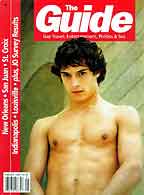
January 1999 Cover
|
 |
The year in gay film
By
Michael Bronski
Gods and Monsters
Directed by Bill Condon, based on the book by Christopher Bram; with Brendan Fraser, Ian McKellen, Lynn Redgrave.
How to order
Wilde
Directed by Brian Gilbert; starring Stephen Fry, Jude Law
How to order
Wild Things
Directed by John McNaughton; starring Kevin Bacon, Matt Dillon
How to order
Velvet Goldmine
Directed by Todd Haynes; starring Ewan McGregor, Jonathan Rhys-Myers
How to order
Two Girls and a Guy
Directed by James Toback; starring Robert Downey, Heather Graham
How to order
The Opposite of Sex
Directed by Don Roos; starring Christina Ricci, Martin Donovan
How to order
The Object of My Affection
Directed by Nicholas Hytner; starring Jennifer Aniston, Paul Rudd
How to order
The Hanging Garden
Directed by Thom Fitzgerald; starring Chris Leavins
How to order
The Celebration
Directed by Thomas Vinterberg; starring Henning Moritzen, Ulrich Thomsen
How to order
Regeneration
Directed by Raoul Walsh; starring Rockcliffe Fellowes
How to order
Primary Colors
Directed by Mike Nichols; starring John Travolta, Emma Thompson
How to order
Practical Magic
Starring Sandra Bullock, Nicole Kidman
How to order
Pecker
Directed by John Waters; starring Edward Furlong, Christina Ricci
How to order
Mulan
Directed by Tony Bancroft, Barry Cook; starring Eddie Murphy, Ming-Na Wen
How to order
Mrs. Dalloway
Directed by Marleen Gorris; starring Vanessa Redgrave, Natascha McElhone
How to order
Ma Vie en Rose
Directed by Alain Berliner; starring Michele Laroque, Jean-Phillipe Ecoffey
How to order
Lost in Space
Directed by Stephen Hopkins; starring Mimi Rogers, William Hurt, Matt LeBlanc
How to order
In and Out
Directed by Frank Oz; starring Kevin Kline, Joan Cusack
How to order
How to order
High Art
Starring Ally Sheedy
How to order
Happiness
Directed by Todd Solondz; starring Dylan baker, Phillip Seymour Hoffman
How to order
Dear Jesse
with Tim Kirkman
How to order
Bound
Directed by Andy Wachowski, Larry Wachowski; starring Gina Gershon, Jennifer Tilly
How to order
Blade
Directed by Stephen Norrington; starring Wesley Snipes, Stephen Dorff
How to order
Afterglow
Directed by Alan Rudolph; starring Nick Nolte, Julie Christie
How to order
54
Directed by Mark Christopher; starring Mike Myers, Ryan Phillippe
How to order
It used to be easier spotting trends in gay and lesbian films. There were a handful of independent films-- either serious documentaries about lesbian communes or
badly-made experimental shorts about the joys of masturbation, as well as a smattering of mainstream films that had ill-tempered or psychotic gay characters. But these
days "we are"-- as the old saying goes-- "everywhere."
Last year Kevin Klein did big box-office business in
In and Out and the year before Gina Gershon and Jennifer Tilly proved, in
Bound that the butch/femme cover girl was as sexy and malevolent as any in heterosexual
noir. As every film year progresses, we see more representations of gay men, lesbians, dykes, queers,
queens, bisexuals, crossdressers, pederasts, and transgendered folk than ever before.
While 1998 was brimming with queer images-- many of them complicated, troubling, and challenging-- the major trend in the year's films was an
ongoing investigation of what it means to be gay or lesbian in a society that does not always persecute queers, but hardly supports them. And imbedded in this discussion is
the more complicated issue: what part does the imagination play in the politics of everyday gay life?
This public conversation about queer artists-- usually occurring in films made or written by open homos-- can take place now precisely because there are so
many other manifestations of queerness on the silver screen, often presented in curiously unquestioned or non-empathic ways. What are we to make of the minor
gay characters in Afterglow and
Blade, the crossdressers in
Elizabeth, or the gay activity in Butcher
Boy, Happiness, or Celebration? They are more than background
or sexual local-color, but they don't really define the films in which they appear.
The same is true about the open (and more important) gay and lesbian characters in other films-- Kathy Bates's morally astute political organizer in
Primary Colors, Paul Rudd's young-queen-in-search-of-himself in
The Object of My Affection, the antics (both playful and spiteful) of two-thirds of the eponymous characters in
Two Girls and a Guy, the scheming dykes in
Wild Things, or the tortured World War I poets in
Regeneration. More and more, same-gender sexual attraction and activity
is appearing in films without a great deal of fuss or bother. Even the usual methods of gay-coding are getting more obvious. Gary Oldman's Dr. Smith in the sci-fi
flop Lost in Space was overtly homophobic, and Stanley Tucci and Oliver Platt's not-so-odd couple in
Imposters was, again, so obviously gay as not to be coded at all.
The lesbian subtext of Practical Magic seemed on the surface, given what would have been done with it five years ago. Even the transvestism of
Mulan-- Disney goes transgender-- felt a little old-hat and expected. It's a sign of the times that drag jokes in family entertainment are acceptable-- even presented as morally edifying.
All this makes gay independent films-- both fiction films like
The Delta and Leather Jacket Love
Story or documentaries like Dear Jesse or
Lavender Screen-- look a little less adventuresome. Roland Tec's
All the Rage was an intelligent, thoughtfully mapped out look at gay men's lives,
The Opposite of Sex and I Think I Do
were smart and charming (as well as the far less entertaining and successful
Billy's Hollywood Screen Kiss and
54.). These films three years ago would have stood out
as vibrant and unique, but in the rush of so many films they become part of a larger picture of how homosexuals are treated in film.
It is in this overcrowded context that the year's main trends-- artists and the imagination-- emerge.
High Art, Gods and Monsters, Love is the
Devil, Wilde, Velvet Goldmine, and even John Water's
Pecker all contain a common theme: the relationship of the queer artist to her/his audience or protégé. And often enough-- a
problem for those viewers looking for "positive images"-- this relationship is unhealthy, destructive, or at least highly problematic.
In High Art, Ally Sheedy plays a famous lesbian photographer (based vaguely on Nan Goldin) who is addicted to heroin and a bad relationship. She seeks
salvation by falling in love with the ambitious straight woman who is editing a magazine feature about her, and everything ends rather badly. What was shocking about
Lisa Chardanko's film was not that Sheedy's character was a junkie, but that her moral and artistic intemperance was so seductive. If Kathy Bates's highly ethical
political organizer was the moral center of Primary
Colors, then Sheedy is the immoral center of
High Art. Yet the film is so nuanced and well-written that it becomes
an investigation not of "lesbian evil"-- which it might have been in less capable (or heterosexual) hands-- but an examination of how art and talent can go so wrong.
This is also the case with John Muybridge's
Love and the Devil-- a scathing and joltingly improper (fictional) look at the life of British painter Francis Bacon.
Derek Jacobi's brilliant performance as the vicious, demanding artist who publicly humiliates and degrades his lover-- while submitting to him in SM rituals at home--
is unnerving and unpleasant, but incredibly moving. Muybridge does not give us a lot to work with-- he never supplies psychological background to "explain" this-- but
he knows how to go for the jugular. As with High
Art, we get a tremendous sense of how fame and talent can give an artist social and emotional power over others
and how-- with gay artists-- this can play out in curious and complicated ways.
Bill Condon's Gods and Monsters-- based upon Christopher Bram's fine novel
Father of Frankenstein-- is also about artists and protégés, but with a different
twist. Based (very loosely) on the life director James Whale (he directed
Frankenstein and Bride of
Frankenstein as well as other films), Bram's book and the film look at
what might have happened the weeks before the ailing director killed himself. In this story, the patrician, British-born Whale (a wonderful, insightful performance by Sir
Ian McKlellan) befriends his working-class gardener, named Clay Boone (Brandon Fraser). At first it seems as though he just as the hots for him, but it soon
becomes apparent that he wants Clay to kill him and put him out of his physical and mental misery. Just as "his monster" of the film turns on his maker, Whale wants to create
his own murderer-- a beautiful boy at that-- and commit suicide through him. This, to a large degree, is the theme of
High Art and Love is the Devil writ large-- the
gay artist in pain and the power of the imagination.
These destructive relationships are also present-- in more complicated, but less interesting ways-- in Todd Haynes's glam-rock spectacular
Velvet Goldmine and Julian Mitchell's
Wilde. In both these films it is the egocentric artists who help engineer their own destruction by interacting with all the wrong people-- the
crazy American rocker played by Ewen McGregor in the first film, and the world's worst boyfriend, Lord Alfred Douglas, in the second. The problem with both of these
films is that we have in them little vivid or real sense of the artist's imagination. The David Bowie-esque rocker of
Goldmine and Stephen Fry's Oscar Wilde have none of
the (apparent) internal vision or imagination that Sheedy, Jacoby, or McKlellan deliver. What makes those films work is the driving sense that these artists' imaginations
and insight make them special. Even as they become (or try to invent) monsters, they are understandable. The imagination is a spectacular force-- it is what allows us
to create art, to enter into the world of a film, to imagine alternative lives and societies. Usually thought of only as an artistic capacity-- and suspect at that-- the
imagination can be a political tool as well.
In Mrs. Dalloway-- based on Virginia Woolf's novel-- Vanessa Redgrave gives an exquisite performance of a woman whose imagination helps get her not
just through a single trying day of giving a dinner party, but her entire life. Redgrave shows us the nuance of imagination in her performance-- its soothing calmness and
its dangerous edges-- and we see how it has both trapped and freed her. Thom Fitzgerald's
The Hanging Garden is also about the imagination as a powerful force
for salvation. Here a young Canadian gay man revisits his highly dysfunctional family. Amid a series of visions, memories, hallucinations, and nightmares (where we
the audience cannot tell the difference between reality and memory, fear and longing), he comes to a place of safety and strength.
There is a strong gay tradition of art in which the imagination is a refuge from and a salve for a homophobic world. Alaine Berliner's
Ma Vie en Rose is a perfect example of this. Here a young boy who simply wants to be a girl is continually misunderstood and tortured by his neighbors and family until he attempts suicide.
But his salvation in all of this is to imagine a world-- based upon a bizarrely beautiful Barbie-like doll and her accessories-- in which he can fly and be accepted for who
he is. The film's explication of familial and social homo- and trans- phobia is startlingly real, but the image of freedom that it allows its main character is visceral
and moving.
This, to some degree, is what gay art has always presented us: the fantasy of a safe place where we can be ourselves without fear of being harmed or
threatened. That is why, once again, the best gay film of the year is
The Wizard of Oz. Re-released in a new remastered print,
The Wizard of Oz-- no matter how well we know
it-- speaks to a sense of social and emotional ostracization as few films do. Like
Ma Vie en Rose, it grants its central character-- and us-- a vision of freedom and
wonderment that is lacking in the material world. It worked in 1939 and it works today. At the 1977 March on Washington, Holly Near sang what she called the "gay
national anthem," and it was, not surprisingly, "Somewhere Over the Rainbow."
Simple multiplicity of representations is a good thing. It is also important to look for deeper truths. They may be-- as in
High Art and Gods and Monsters-- sometimes difficult, scary, or contradictory. But if they are rooted in authentic emotional experience and tell
us truths about ourselves, then they may make us think and change our lives.
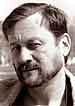
| Author Profile: Michael Bronski |
|
Michael Bronski is the author of
Culture Clash: The Making of Gay
Sensibility and The Pleasure
Principle: Sex, Backlash, and the
Struggle for Gay Freedom. He writes
frequently on sex, books, movies, and
culture, and lives in Cambridge,
Massachusetts. |
| Email: |
mabronski@aol.com |
You are not logged in.
No comments yet, but
click here to be the first to comment on this
Movie Review!
|