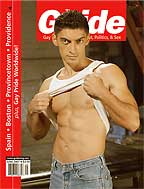
June 2007 Cover
|
 |
A return of the gay book boom?
By
Michael Bronski
So·Ma
by Kemble Scott
Kensington Press
How to order
My Undoing: Love in the Thick of Sex, Drugs, Pornography, and Prostitution
by Aiden Shaw
Carroll & Graf
How to order
Trends, as is their nature, come and go. The same holds of genres. Since the 1970s there's been a steady swing of the pendulum above the pit of popular gay fiction. There have been, and will always be, novels about
same-sex male experience. But the distinct genre "gay fiction" is really a post-Stonewall invention. Sometime in the 1970s, mainstream publishing houses discovered that there was a gay market. What began with a trickle of
books grew to a mini-industry through the 1980s and early 90s. Most big New York publishing houses got in on the action, and some (such as St. Martin's Press) even established their own gay lines.
T
hen, sometime in the early 90s, the deluge petered out-- as did mid-list fiction from many publishers. The once thriving
faux-genre ("gay fiction" really is just a catch-all category) seemed to be dwindling. Sure,
important writers-- such as Christopher Bram, Andrew Holleran, Mark Merlis, and Edmund White-- were publishing throughout this period; it was the flow of good, solid popular fiction that slowed to a crawl. Yet these past three
months we've seen a slew of engaging, readable gay novels that are sexy and smart. Are the 80s back?
The title of Kemble Scott's So·Ma refers to the hallucinogenic drug, the human body, and the South of Market section of San Francisco known, in the past, for its transgressive sex clubs and freewheeling social
scene. Shenanigans both homo- and heterosexual are detailed. As if drugs, sex, and real estate wasn't enough, Scott also brings in the intricacies of the city's dot-com industry.
The characters here are familiar, standard-issue
Sex and the City types-- Raphe, the sexy writer; Julie, the beautiful dupe; Mark, the conniving shit-- but these recognizable characters are the stock-and-trade of such stories.
But the best thing about So·Ma is its breezy, sexy quality that moves through a quick narrative and manages to be both entertaining and almost-on-the-edge, but still anchored in a good old-fashioned story.
In an interview at the end of the novel, Scott speaks about being influenced by Armistead Maupin's
Tales of the City, and you can see it here. But Maupin is more of a compulsive storyteller-- a contemporary Dickens or
Trollope spinning out gripping serial narratives. Scott is actually closer to old-fashioned pop writers such as William Goldman, whose "shocking" 1964
Boys and Girls Together, is almost a model for
So·Ma. Or you can see Scott's
So·Ma as an updated version of Kathleen Winsor's pot-boiling 1946 historical novel
Forever Amber, in which pretty, sexy people have lots of adventures, sexual and otherwise. There isn't much of an afterlife-- thinking about
these characters stops as you turn the last page. But for pop fiction,
So·Ma goes down easily, and there's no annoying, "Why did I read this" aftertaste.
Putting the 'graphy' in 'porno'
My Undoing: Love in the Thick of Sex, Drugs, Pornography, and
Prostitution is the fourth volume in Aiden Shaw's ongoing series of novels.
My Undoing is actually billed as an autobiography-- told in the first-person by Shaw--
but its connection to the earlier work is unmistakable. In these previous
volumes-- Brutal (1996), Boundaries (1999), and
Wasted (2001)-- Shaw told the story of a person much like himself; now he has graduated to something
non-fictional. Given that Shaw-- the veteran of over 50 pornographic films and a bright star in that world-- has been shaping his public image for well over a decade, this confluence of fiction, visual, real, written glimpses of him
make perfect sense: there are no particular separations. And while
My Undoing doesn't have the concise, well-constructed punch of his debut novel, it is a terrific, smart, and quite pungent.
Shaw's voice is accessible, friendly, honest, and authentic. Like
So·Ma, Shaw's My Undoing is an adventure story-- less driven by physical adventures (although there's a great deal of sex) than a psychological journey that
takes him through an urban landscape of increasingly destructive (paid and unpaid) sex and drugs into a place where he actually begins to like himself and relate to men whom he desires as lovers and not just pick-ups.
The narrative form here is essentially the confessional-- a sturdy, if somewhat weary genre that suited both St. Augustine and former New Jersey governor James McGreevy. Like these two authors (and unlike many
other confessionalists), Shaw avoids self-pity, false-humility, and self-exploitation. There's a tinge of "even pretty people have problems" here, and clearly the thrust of the narrative is how drugs and sex-- even when they are
not destructive to the narrator-- don't bring happiness. It's enlightening to read
My Undoing in relationship to Shaw's novels and his video work. The realism of his fictional work (it's not called
Brutal for nothing) clashes with the overt fantasy of the porn. But
My Undoing manages to bring to the two together in a dialectic that makes emotional and psychological sense. It isn't that Shaw is a master of psychological revelation (indeed, one has the
sense that there are more honest revelations in the "novels"), but simply that the work has the ring of honesty. Which is all you can ask from autobiography or-- maybe even especially-- popular fiction, of any variety.
| Author Profile: Michael Bronski |

|
Michael Bronski is the author of
Culture Clash: The Making of Gay
Sensibility and The Pleasure
Principle: Sex, Backlash, and the
Struggle for Gay Freedom. He writes
frequently on sex, books, movies, and
culture, and lives in Cambridge,
Massachusetts. |
| Email: |
mabronski@aol.com |
You are not logged in.
No comments yet, but
click here to be the first to comment on this
Book Review!
|