|
 |
Early AIDS, old Boston, Merrie England
By
Michael Bronski
The King's Men
Christopher Fall
Idol Books
How to order
Improper Bostonians: Lesbian and Gay History from the Puritans to Playland
The History Project
Beacon Press
How to order
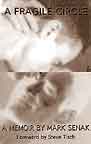
A Fragile Circle
Mark Senak
Alyson Publications
How to order
The personal memoir has become the genre of choice in writing about AIDS. Works such as Mark Doty's
Heaven's Coast, Fenton Johnson's A Geography of the
Heart, and Amy Hoffman's Hospital Time, among others, brought home the suffering and confusion engendered by the disease. These books detailed the day-to-day life
of caring for someone with AIDS. Mark Senak's
A Fragile Circle (Alyson Publications, paper, 216 pages, $13.95)
does this, too, but with a political twist.
In the mid-1980s, right after law school, Senak began working at New York's Gay Men's Health Crisis. There was little doubt that an AIDS crisis existed, but
what to do about it was an enormous question. Senak recounts the confusion and near-despair that reigned at the time as doctors, lawyers, and social workers faced
unprecedented problems. Senak tells well this story of social movements and political action, helping readers today to understand the bewilderment of those times. But
along with this history, Senak also offers a more personal story of his relationship with Joe, an HIV-positive man also diagnosed with lung cancer. These sections form
the emotional heart of A Fragile Circle and infuse the rest of Senak's tales of legal and social activism with passion and insight. By moving back and forth between
the political and the personal, Senak gives us a rich picture of this part of the AIDS epidemic. With prose that is spare but often brimming with emotion, Senak works
his way into readers' hearts and minds. A vital aspect of AIDS writing is to bear witness, and this
A Fragile Circle does beautifully.
Of beans and Brahmins
Since the 17th century, Boston has played a vital role in American history, for years being the center of society and intellectual ferment. So it's not surprising
that the city also has a deeply rooted and varied history of same-sex culture.
Improper Bostonians: Lesbian and Gay History from the Puritans to
Playland (Beacon Press, cloth, 210 pages, $24.95)
is a lavishly illustrated, astutely researched look at the role that homoeroticism has played in constructing Boston society. From private letters of
John Winthrop (Massachusetts's first governor) to 19th century "Boston Marriage" (the widely used term for two unmarried women living together), to the open and
brash gay life that existed in Boston's notorious Scully Square in the 1920s and 30s, to the more openly queer life after World War II,
Improper Bostonians deftly shows how homophiles were always present in the social, political, and intellectual life of the city.
The writing here makes complicated history easily understandable, and entertains us as well with the sort of stories that made "history" thrilling and fun in
grade school-- well, not exactly. But the best part of the book is its stunning array of engravings, paintings, news clippings, and photographs (many from personal
collections). These form the heart and soul of Improper
Bostonians and make it live and breath, bringing us into the personal lives of people who might otherwise be just figments
of history. Looking over the portraits of politicians, poets (including Katherine Lee Bates the lesbian Wellesley professor who penned "America the Beautiful"),
and performers, one is reminded how once hidden homosexual history is now breaking out.
Well put together
Popular gay erotic fiction has always had a bad reputation-- not because it was "erotic," but because so much of it was so
badly written. For years, pulpy, poorly printed novels with titles like
Butt Brothers and Slave Squadron were all that were available to men
looking for homosexual erotica. Christopher Fall's
The King's Men (Idol Books, paper, 213 pages, $12.95)
is literate, well plotted, and engagingly sexual. Set during the English Civil War,
The King's Men tells the story of Ned Melcombe and his lover Lewis, who
find themselves on opposite sides. Counterpointing their story is that of local minister Cornelius Matthews, who finds great pleasure in
being punished whether he has sinned or not, as well as the sexual adventures of a number of rugged saoldiers, inventive traveling players,
and corrupt Royal officials. The sexual adventures in the book range from romantic interludes and playful frisky romps to SM-tinged
violence and torture: something, as they say, for almost everyone. As high-tone erotica,
The King's Men is smart, sexy, and rewarding.
| Author Profile: Michael Bronski |

|
Michael Bronski is the author of
Culture Clash: The Making of Gay
Sensibility and The Pleasure
Principle: Sex, Backlash, and the
Struggle for Gay Freedom. He writes
frequently on sex, books, movies, and
culture, and lives in Cambridge,
Massachusetts. |
| Email: |
mabronski@aol.com |
You are not logged in.
No comments yet, but
click here to be the first to comment on this
Book Review!
|