February 1999 Cover
|
 |
How gay people transformed modern culture
By
Michael Bronski
Theater of the Rididculous
Bonnie Marranca and Gautam Dasgupta,
editors
Johns Hopkins University
Press
How to order
Period Pieces
Rudy Kikel
Pride Publications
How to order
Acts of Intervention: Performance, Gay Culture, and AIDS
David Roman
Indiana University Press
How to order
The affects of AIDS on gay culture-- writing and theater, especially-- are myriad. While gay novels and poetry have charted the epidemic, performance art most closely embraced AIDS activism. David Roman's Acts of Intervention: Performance, Gay Culture, and AIDS (Indiana University Press, paper, 345 pages, $19.95) charts the emergence of AIDS as a subject in performance and theater-- from the post-modern, high-camp, drag extravaganzas of Lypsinka to Tony Kushner's epic Angels in America, from the overtly political parody of the Afro Pomo Homos to Tim Miller's nude monologues.
As a theater historian, Roman is thorough and insistent. He is as interested in local and community-supported performance art as in main-stage productions, and is unflagging in his desire to uncover varied forms of stagecraft. Roman is also an astute commentator and critic. Both mindful of and unhooked from tradition, he examines theater's many forms and ever-changing social and artistic contexts. New forms of theater, he understands, are often in a dialogue with tradition. But Roman is as interested in politics as art. He discusses how public protests against government AIDS policy are "performances" themselves. Roman details and makes vivid the huge sea-change that ACT UP and Queer Nation brought to the gay political scene in the late 80s and 90s. While Roman details the political aspects of these groups and demonstrations-- including the grandly imaginative postering campaigns of ACT UP's Gran Fury-- he also shows how these exhibitions of revolt also functioned as theater. This wedding of art and politics, of social rebellion and artistic riot, is one of the main gifts that gay sensibility and queer liberation has brought to the mainstream. Roman's knowledge of AIDS, art, and gay culture is exhaustive and his writing is clear, succinct, and informed. Gay culture and gay art have always been about becoming visible and powerful. Acts of Intervention charts with grace and intelligence how this has occurred over the past 17 years. History in poetry In the 1970s, Rudy Kikel garnered a reputation as an astute critic of the emerging wealth of gay poetry. Since then he has published several of his own collections-- Lasting Relationships and Long Division-- and now with Period Pieces (Pride Publications, paper, 78 pages, $9.95), he presents us with his best work to date. Kikel has always been a contemplative poet. His conversational form and self-revelation fuels the emotional intensity of his work. The poems here are relentless self-examinations of personal responsibility. Another Kikel theme is the effect of national and personal history on the individual. In the "My Hamlet" series, Kikel explores with compassion and a startling sense of self- inquisition his decades-old relationship with Craig, an ex-lover who later dies of AIDS. The passion and intelligence here is both powerful and illuminating. In the "Gottscheers" poems, Kikel reflects upon his own German heritage, celebrating the bravery of his parents and their siblings as he attempts to come to grips with history. These poems with their sense of history and their desire to bring together a heterosexual family past with the homosexual present of the author are precise, poignant, and filled with intellectual and emotional passion. Life's a stage In her 1964 "Notes on Camp," Susan Sontag claims that "homosexual aesthetic irony" is one of the foundations of contemporary culture. Indeed, contemporary theater would not exist as we know it without the openly gay innovators-- mixing camp with Samuel Beckett and sexual politics with Artaud-- who wrote and performed off-off-Broadway in the 1960s. Bonnie Marranca and Gautam Dasgupta's Theater of the Ridiculous (Johns Hopkins University Press, paper, 189 pages, $17.95) not only discusses the work of Jack Smith, Ronald Tavel, Charles Ludlam, and Kenneth Bernard, but reprints a full-length play by each of them. The critical commentary is intelligent and illuminating, but the plays themselves-- now mostly out of print-- give a real feeling for their work and contributions to art. Ronald Tavel's The Life of Lady Godiva is an exquisite parody of celebrity culture and the Hollywood musical that still hits its targets today. Tavel uses language anarchically and shows a nearly insane desire to please his audience as he keep on pushing them to the edge of exhaustion or annoyance. Kenneth Bernard's The Magic Show of Dr. Ma-Gico shows the influence of commedia dell'arte and carnival sideshow on both gay culture and popular theater. But it also betrays a risky (even for its time) edge that neither panders to the newly invented conventions of the avant garde nor to the expectations of an audience willing to forgo quality for extremism and style. These plays know what they're doing and where they're going-- you even have the sense that in their heedless enthusiasm they knew they were reinventing culture. As delightful as it is to simply read these now-classic-- if never-performed-- scripts, this book is also a historical document. It's a perfect volume for anyone interested in the connections between gay sensibility, art, and contemporary politics. **
| Author Profile: Michael Bronski |
|
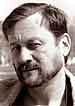
Michael Bronski is the author of
Culture Clash: The Making of Gay
Sensibility and The Pleasure
Principle: Sex, Backlash, and the
Struggle for Gay Freedom. He writes
frequently on sex, books, movies, and
culture, and lives in Cambridge,
Massachusetts. |
| Email: |
mabronski@aol.com |
You are not logged in.
No comments yet, but
click here to be the first to comment on this
Book Review!
|