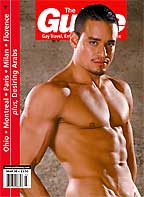
March 2008 Cover
|
 |
By
Michael Bronski
Vital Signs: Essential AIDS Fiction
Dale Peck (Foreword)
Richard Canning (Editor)
Carroll and Graf
How to order
The Great Cock Hunt
by "Alex"
Kensington Press
How to order
How far has AIDS disappeared from our collective consciousness? How much of the epidemic has simply been forgotten, of subsumed into some general "Boy, that was bad" sense
of recent history? Do only gay men, and the gay community remember AIDS as a problem in the U.S? (Of course everyone knows it as a "big problem" in Africa, but that's dulled by a
sense that it's not really our problem.)
I just finished teaching a course at Dartmouth College titled "Plagues and Politics: The Impact of AIDS on U.S. Culture." A fresh crop of undergraduates is always a telling gauge as
to what has and hasn't registered in recent history. Of the 43 students, only five realized that AIDS was ever -- or now -- a big problem in the U.S. Even many of the (small number of)
gay students had no notion that AIDS was once a "gay disease." Of course, they all knew about AIDS in Africa, and a good number had even worked on African HIV-related projects, but
there was almost no knowledge of AIDS history in the U.S.
Given this gap in historical appreciation, there could be no better time for the release of Vital Signs: Essential AIDS Fiction edited by Richard Canning (Carroll and Graf, 352 pages, $16). Memoirs and fiction about AIDS have served as memorials "to
worlds lost or worlds that never were," Dale Peck writes in the book's forward. While that's true, I think that for younger readers today, AIDS fiction -- especially as conveniently collected here
-- serves a different purpose: it fills in feelings, memories, and hard historical data from a recent past in danger of being completely forgotten.
Richard Canning's introduction offers a clear-eyed overview of AIDS writing. Canning is especially helpful in spelling out the homophobic misinformation that was promulgated by
gay journalist Randy Shilts in his allegedly non-fiction history of the early epidemic
And The Band Played On, a book that remains in print after two decades and continues to libel the actions
of gay activists. Canning hits hard on Shilts's exploitative journalism. Indeed,
Vital Signs can be seen as a response to
And the Band Played On. Though labeled "fiction," its stories of the
AIDS epidemic convey the greater truth.
Avid readers of gay fiction are sure to know some of these stories: Edmund White's "The Oracle," Andrew Holleran's "Friends at Evening," Allen Barnett's "Philostorgy, Now
Obscure," and David Leavitt's "Gravity." Some real gems readers may have missed include Rebecca Brown's "A Good Man" (a chapter from her incredible 1993 novel
Annie Oakley's Girl) and Carole Maso's "Winter 1985" (from her 1990 novel
The Art Lover). Both are moving testaments to how the epidemic affected a wide range of people, but also how an artist can engage with
and enlarge her topic. Maso uses illustrations here; Brown, a modified memoir style that shocks with its emotional immediacy. Jane DeLynn's "Patient Zero" is a direct response to Shilts's
libeling of Gaetan Dugas as "the man who brought AIDS to America" and a fine, startling story as well. In the same vein -- fiction based on historical figures -- is Matias Viegener's "Twilight of
the Gods," a little-reprinted but brilliant story of Michel Foucault, Rock Hudson, and Roy Cohen all attending the same infectious disease clinic in Paris. Its intellectual verve is astounding.
We are perhaps at enough distance from the early impact of AIDS to see the family resemblance shared by what then felt like urgently unique efforts at an artistic response.
Vital Signs: Essential AIDS Fiction is both an analysis of the past and a snapshot of our present understanding, providing an invaluable resource for a future wherein the memory of the fear and
hysteria surrounding early AIDS will grow fainter and fainter.
Funeral to feast
Life and sex go on. A palate-clearing chaser to
Vital Signs might be a browse to Thegreatcockhunt.com.
Blogger "Alex" has won a huge fan base over the past few years with
happy chronicles of his sex adventures, semi-graphic illustrations, as well as links to porno sites. A jump from blog to novel might seem an unlikely leap of literary forms, but (Kensingston,
320 pages, $15) -- a novel based upon Alex's blog, or his life, or someone's imagination -- is actually a treat.
Nothing is extraordinarily great here in this panoply of twenty-something gay-boy soft-core sex adventures, but the tone charms and the attitude is sprightly fun. Think of it as a
cross between early episodes of Sex and the
City (when it was, ahem, original and witty) and the early 1960s sex novels from Olympia Press's Traveler's Companion series. There the sex was
fun, easy, and often connected with game playing, drugs, and a catch-as-catch-can feeling of excitement. Alex isn't up for any literary prizes, but readers looking for a good time will find
The Great Cock Hunt a treat.
| Author Profile: Michael Bronski |
|
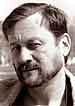
Michael Bronski is the author of
Culture Clash: The Making of Gay
Sensibility and The Pleasure
Principle: Sex, Backlash, and the
Struggle for Gay Freedom. He writes
frequently on sex, books, movies, and
culture, and lives in Cambridge,
Massachusetts. |
| Email: |
mabronski@aol.com |
You are not logged in.
No comments yet, but
click here to be the first to comment on this
Book Review!
|