Chicago gay paper blackballs sex researcher after transgenders protest. Censorship? Or keeping science accountable?
By
Jim D'Entremont
The Chicago Free Press announced in August that the influential gay weekly would cease to print ads recruiting pairs of gay brothers for a genetic study on sexual orientation.
The project is funded by the US National Institutes of Health (NIH) through the National Institute for Child Health and Human Development. As outlined at its website, www.gaybros.com, the study will be based on
bloodwork and questionnaire responses from a statistical sample of 1000 fraternal pairs. Pertinent data is being obtained and analyzed by a highly credentialed team of researchers from the Evanston Northwestern Healthcare
Research Institute, the University of Chicago, the University of Illinois at Chicago, and Northwestern University. Among them is Dr. J. Michael Bailey.
"Since we cannot in good conscience steer our readers to a study that Bailey is a part of," an August 9
Chicago Free Press editorial affirmed, "we're canceling the ad. And in the future, before accepting any ads for
research studies, our ad staff will ask who is involved. If Bailey is, we won't accept the ads."
Professor Bailey is a former chairman of the psychology department at Northwestern, where he has been based since 1989. A divorced heterosexual with two teenaged children, he teaches a popular undergraduate course
titled "Variations in human sexuality." He has long been engaged in research on gender nonconformity, sexual arousal, and genetics. His investigations into genetic components of homosexuality have been condemned by
right-wing proponents of "reparative" therapies said to transform gay people into heterosexuals, and questioned by watchdogs on the left who fear that Bailey's interest in identifying gay fetuses may serve a wish to abort them.
Bailey's work on sexual variance has yielded evidence that gay males are inherently more feminine than heterosexual males, and that although women may be bisexual, men are always either straight or gay. But the
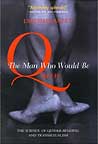
crowning provocation of his career is his 2003 book
The Man Who Would Be Queen: The Science of Gender-Bending and
Transsexualism.
In attacks led by transsexual activist Lynn Conway and others, the book has been described as substandard science, anecdotal, and lacking in documentation. But
The Man Who Would Be Queen is not a scientific paper.
Intended as a work of popular science, the 233-page volume is aimed at a broad, non-academic audience. (Its full text is available online at http://newton.nap.edu/books/0309084180/html.) The practice of publishing such books is
not unusual among scholars and academicians, especially those seeking popular support for ideas under siege. World-renowned memory expert Elizabeth Loftus has made similar overtures to the general public
through The Myth of Repressed Memory and other publications.
Initially well-received, The Man Who Would Be
Queen was nominated in the transgender category for a 2003 Lambda Literary Award. But following a blast of vilification from a segment of the transgender community, the
Lambda Literary Foundation withdrew the nomination.
How do I love thee?
To an extent, Bailey is a disciple of Ray Blanchard, the controversial Canadian sexologist who coined the term "autogynephilia," a descriptive term for men sexually aroused by the idea of being women. Blanchard, who heads
the gender program at the Clarke Institute of Psychiatry, a facility within Toronto's Center for Addiction and Mental Health (CAMH), has dismissed the woman-trapped-in-a-man's-body model of transsexualism, and has
argued against gender reassignment surgery for male-to-female transsexuals, saying it only creates "a man without a penis." Some transsexual women, viewing Blanchard's institution as a bastion of archaic thinking, have
nicknamed it "Jurassic Clarke."
Basing its arguments on Blanchard's research, Bailey's book describes two patterns of male-to-female transsexualism: homosexual and autogynephilic. A homosexual transsexual identifies with women and is attracted to
men; an autogynephilic transsexual is a more or less heterosexual man who is so turned on by the notion of being a woman that he wants to become female. Part of Bailey's intent was to make this aspect of Blanchard's work
accessible to a general audience.
The Man Who Would Be Queen contains personal histories of transgendered individuals, some of whom Bailey met at Chicago's Baton Show Lounge, a Clark Street venue for drag artists and transsexuals. "My interactions
with these individuals were not... the basis for the theory," Bailey explains in an online response to his critics. "Instead, they were the basis of my portrayals of real people, struggling or triumphing in real situations."
Unhappy camper
One of those individuals was Anjelica Kieltyka, a transsexual who appears in the book under the pseudonym "Cher." Initially cooperative, Kieltyka became incensed by Bailey's characterization of her as autogynephilic, and
lodged an ethical complaint against Bailey, claiming he had used her as a subject for research without her consent. Bailey counters that he used her as an example, not a research subject, and that she knowingly participated in the
book's development.
"I've known Michael Bailey personally for years," says Paul Kasman, a Chicago-area gay activist who has been invited to address Bailey's classes on a number of occasions. "He's a good guy. But Michael is a scientist, first
and foremost, and he goes where research takes him. He doesn't shy away from areas that are sensitive or difficult or make people uncomfortable."
Bailey's critics have invoked the specters of an infamously racist, 40-year syphilis study initiated in 1932 by the Tuskegee Institute, and Charles Murray and Richard Herrnstein's 1994 book
The Bell Curve, with its queasy assertions on intelligence and race. In an e-mail to transsexual organizations, Lynn Conway called
The Man Who Would Be Queen "very analogous to the Nazi propaganda films about Jews in WWII." A customer-reviewer
at Amazon.com, "J.M. Hasselhoff," calls Bailey a "criminally insane low-down dirty closet tranny... who should have been aborted as a fetus but unfortunately wasn't."
Some who sympathize with Bailey's detractors are put off by their stridency. "Their behavior with us has at times been semi-hysterical," concedes Louis Weisberg, managing editor of
the Chicago Free Press. "Bailey's critics
make some legitimate points, but they're clearly stressed."
Vatican v. Galileo redux?
Bailey's critics follow the familiar patterns of ideologues seeking to discredit scientists whose findings they deem politically wrong. Their tactics parallel the victim/survivor movement's campaigns against Elizabeth Loftus
and other debunkers of repressed memory. Their rhetoric echoes attacks on Bruce Rind, Philip Tromovich, and Robert Bauserman's 1998 meta-analysis of the properties of child sexual abuse (CSA) using college samples, a
study concluding that "the construct of CSA, as commonly conceptualized by researchers, is of questionable scientific validity."
"We appreciate good science," insists the August 9
Chicago Free Press editorial (headlined "Bad Science"). "We don't appreciate being used to further the dubious agenda of someone who believes he should not be
held accountable to our community."
The paper's editorial staff had other objections to Bailey besides his disputed stance on transsexualism. "We were offended by his research into effeminate children," says Weisberg. "It's the type of thing that feeds
stereotypes. Why go there?"
Many of Bailey's findings merit further study. His work on bisexuality may be skewed by the use of penile plethysmography, a strain-gauge measure of erectile response to stimuli (e.g., porn) that many consider an
unreliable measure of sexual attraction. But the idea that Bailey must "be held accountable to our community" occupies a different plane of concern.
Some activists adhere to the dubious idea that science must follow ideology, and that good science is ideologically useful science. Many laymen feel that scientific findings can be tried in the court of public opinion. Such
flat-earth attitudes chill free inquiry and produce the "bad science"-- science tyrannized by preconception-- that the
Chicago Free Press deplores.
The NIH gay-brothers project director, Dr. Alan R. Sanders, a psychiatrist at the Evanston Northwestern Healthcare Research Institute, believes the answer to flawed scientific findings is more and better findings, not
suppression of data that makes some people squirm.
"Our chief ethical concern," he says, "is whether or not we are running an ethical study conforming to professional standards of transparency and right conduct. We do want to be sensitive and thoughtful, but our goal
is knowledge and understanding. I feel sure that in the end, for our subjects, understanding promotes greater acceptance."
You are not logged in.
|





 Advertise with us
Subscriptions
Contact us
Site map
Translate
Advertise with us
Subscriptions
Contact us
Site map
Translate