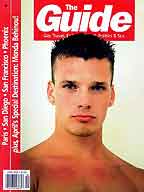
April 1999 Cover
|
 |
With an anthro section, too
By
Michael Bronski
White Nights and Ascending Shadows: An Oral History of the San Francisco AIDS Epidemic
Benjamin Heim Shepard
Cassell
How to order
Gross Indecency: The Three Trials of Oscar Wilde
Moises Kaufman
Grove Press
How to order
Gay Man's Guide to Heterosexuality, A
C. E. Crimmins, Tom O'Leary
St. Martin's Press
How to order
Year 2000 will mark the 100th anniversary of Oscar Wilde's death, and the great playwright and social philosopher is being recognized not only for his wit and
wisdom, but for the tragedy of his life. Oscar Wilde is today probably the most famous person to be punished by the state for homosex. After three trials (the first a libel suit
he brought against his lover's father, the second two for sodomy) Wilde was sentenced to two years' hard labor. In
Gross Indecency: The Three Trials of Oscar
Wilde (Grove Press, paper, 144 pages, $10), playwright Moises Kaufman has taken the trial transcripts, shortening and combining them into a concise narrative. The result
is a brilliant play that gives the history of Wilde's life and crimes, and allows us to see how social hatred sent Wilde to prison.
Kaufman augments and juxtaposes the transcripts with quotes from the popular press and such eminent Victorians as George Bernard Shaw (one of the
few prominent writers who publicly stood by Wilde) and Victoria Regina herself (who agreed that male homosexual behavior should be punished, but did not believe
that women would engage in same-sex antics). Kaufman wipes away the myths and historical hearsay to present Wilde's story in a broad social context.
Kaufman amasses a dazzling display of historical research, woven together with sharp intelligence, and showing tight-edged, forceful stagecraft. In
Gross Indecency, the state's case against Oscar Wilde becomes an indictment of how "proper" and "moral" society punishes those who speak the truth and expose sexual
and social hypocrisy
Anthropology comes in many guises, and while many Westerners earlier this century may have been thrilled to learn about the mating habits of Samoans,
readers today demand something more sophisticated. That is why
A Gay Man's Guide to Heterosexuality (St. Martin's Press, paper, 145 pages,
$14.95) is a vital book. Taking their cue from Thorsted Veblen's classic
The Theory of the Leisure Class-- which used traditional anthropological methods to examine the lives of the rich
and entitled-- C. E. Crimmins and Tom O'Leary have put together a guide that explains (for the clueless queer) why straight people act the way they do. From
heterosexual food (Cheese Whiz, Pringles, Tang, and Rice-A-Roni) to heterosexual music (Loretta Lynn, Smashing Pumpkins, AC/DC), to heterosexual casual wear (nylon
black socks, funny tweed hats, and leather sandals with white socks), the authors explicate how the other 90 percent live. While not all the jokes are laugh-out-loud
funny, there are a dozen or so on a page so you never go long without at least a sustained giggle. Blatantly homo-chauvinistic,
A Gay Man's Guide to Heterosexuality uses humor and gay wit to explains how all of us live today.
History not only moves quickly-- it is, in essence, what happened yesterday-- but it's also quickly forgotten. This is especially true when many of the people
who made it are dead or dying. Benjamin Heim Shepard's beautifully composed, wonderfully moving
White Nights and Ascending Shadows: An Oral History of the
San Francisco AIDS Epidemic (Cassell, paper, 278 pages,
$19.95) is a fine and telling history of how one city faced-- and still does-- the effects of AIDS. Based
on interviews and oral histories with 30 people with AIDS, Benjamin Shepard pieces together more than three decades-- from 1968 to 1998-- of gay life and culture.
Alternatively brave, fragile, furious, and mournful, the men interviewed here speak their minds and force their visions and
politics upon us in unforgettable ways. Again and again we are reminded of how diverse and complicated the gay "community" is, and how each
of its aspects has been effected by AIDS. The ultimate effect of
White Nights and Ascending Shadows is to remind us that AIDS has
changed how we view and do politics, it has changed art, it has reorganized how we live and think and talk. As a cultural, political, and
medical history, White Nights and Ascending
Shadows is an important book and the men who speak throughout it are determined that we
remember who they were and what they did to preserve their lives, their families, and their
culture. **
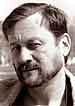
| Author Profile: Michael Bronski |
|
Michael Bronski is the author of
Culture Clash: The Making of Gay
Sensibility and The Pleasure
Principle: Sex, Backlash, and the
Struggle for Gay Freedom. He writes
frequently on sex, books, movies, and
culture, and lives in Cambridge,
Massachusetts. |
| Email: |
mabronski@aol.com |
You are not logged in.
No comments yet, but
click here to be the first to comment on this
Book Review!
|