|
 |
By
Michael Bronski
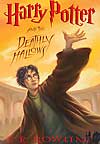
Harry Potter and the Deathly Hallows
by J. K. Rowling (Author)
Mary GrandPré (Illustrator)
Arthur A. Levine Books
How to order
Now that the dust has cleared from the media storm over the release of
Harry Potter and the Deathly Hallows it's possible to assess the damage visited upon the literate world by the publication of the Potter saga's
seventh volume.
Critically, this is an easy call. The new Potter book is no better- or worse-written than the six that came before, which is not saying a whole lot. J.K. Rowling manages to bring together all of the threads she's been
carefully weaving for the past decade. Pro-Potter critics (and readers) seem to think this an amazing feat, rather then just the hard work that any novelist puts in to wrapping up a story. Anton Chekhov noted that if you introduce a
gun in the beginning of a play, you have to kill someone with it before the final curtain. Well, Rowling is nothing if not a dutiful writer, and the 7,476 threads and ideas she introduced in the first six books are accounted for in
her final volume. That is, with one exception.
T
he Potter books appeared in 1998, carrying with them a magical aura. Following in a long tradition of children's fiction, Rowling seemed to subvert reality as we know it: portraits of long-dead people spoke, massive
staircases moved, owls were speedy messengers, and -- most importantly -- people who lived in the dreary real world were called "muggles," a wonderful, now iconic putdown of those who were not magical, who were humdrum.
Muggles became the new Babbitt, the measure of passive, stupid conformity. In this way the Potter books had a "queer" tone and cast, as I wrote in 2003 with the release of the fourth book
(http://zmagsite.zmag.org/sept2003/bronski0903.html). At that point, the queerness of the series seemed undeniable.
So it continues through most of the subsequent volumes. But by the end of the series -- the final summing up, as it were -- Rowling's changed her tune.
Harry Potter and the Deathly Hallows shows a Potterverse that's
become increasingly normalized.
It's not that Rowling has resisted cutting through the sugar coating of bad kiddie lit. She showed death as a possible outcome of the fight between good and evil and began dispatching characters in the seventh
volume, recounting fatalities with the yen of any number of the books of the Hebrew Bible. The problem is that Rowling has become far more, well, muggle, in her worldview. At the end of the book, in a short epilogue, we see that,
after the death of Voldemort, the world has returned to normal. In the world according to J.K.R., this means that Ron and Hermione, Harry and Ginny, and Draco and his unnamed wife are on platform 9-3/4 sending their cute,
cuddly, magical broods off to Hogwarts. After seven long novels, Rowling leaves us with a final vision of these great queer magical people devolved into nothing more than Quidditch moms and slightly vacant suburban dads
(who probably take pride in their weekend barbecuing).
I normally would not feel this descent to normalcy as a deep betrayal of my sensibility -- I'm a casual reader of the Potter series and not very invested. But I find myself caring because of how and where I read the last book
and its horrible (one might even say deathly) epilogue.
On July 21, the release-date of the final volume, I was in London at Sectus 2007, a Harry Potter conference for both academics and writers of fan fiction -- a vast body of internet literature that revels in alternative
Potter narratives, often featuring same-sex or otherwise kinky relationships among Rowling's characters. Meeting and speaking to many of these writers you get a sense of how "queer" the Harry Potter books can be, and how
much of this queerness is essential to their charm.
Harry Potter and the Deathly Hallows bankrupts its predecessors and violates our basic trust in children's books. If there's a theme running through canonical children's literature it's subversiveness, questioning, and
undermining the world as we know it. From nursery rhymes that convey to children that the implausible is possible -- the dish, for instance, running off with a spoon -- the strange-making continues on in the staunch anti-realism of
Lewis Carroll, Peter Pan, and Tolkien's Middle Earth.
So why the poverty of imagination that ends the Potter books? Did Rowling simply cave in to market pressures and decide to go Hollywood? After all, this is all made up -- it's magic; she could have had anything happen,
including Harry running off with Ron, new spells that confound gender norms, or a million other surprises. There's always been a normative strain that ran through Rowling's magic world -- the Weasley's cozy British kitchen was
always more Mrs. Beeton than Morgan Le Fay -- but it was delicately balanced by the power and the sensibility of queerness and magic.
I suspect Rowling lacked the imaginative powers to carry her vision forward. The relapse into the ultra-conventional is such a hasty, hurried retreat into the commonplace it feels like a compulsive panic reaction. The queer
Harry Potter lives on in the minds and keyboards of the legions of fan-fiction writers who imagine alternative universes that are inconceivable to mere muggles.
| Author Profile: Michael Bronski |
|
Michael Bronski is the author of
Culture Clash: The Making of Gay
Sensibility and The Pleasure
Principle: Sex, Backlash, and the
Struggle for Gay Freedom. He writes
frequently on sex, books, movies, and
culture, and lives in Cambridge,
Massachusetts. |
| Email: |
mabronski@aol.com |
You are not logged in.
No comments yet, but
click here to be the first to comment on this
Book Review!
|