|
 |
And absolutely fabulous
By
Michael Bronski
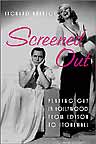
Screened Out: Playing Gay in Hollywood From Edison to Stonewall
by Richard Barrios
Routledge Press
How to order
A popular Paris nightclub. An orchestra launches into a popular foxtrot and the dance floor fills up. A handsome young man makes his way over to one couple.
Young Man: May I cut in?
Woman: Why certainly.
Without skipping a beat the man dances off with the woman's partner, an equally attractive young man. The club's owner (Al Jolson) observes the scene from the bandstand.
Club Owner: (pursing his lips, rolling his eyes, and making a mincing wave with his
arms). Boys will be boys-- woooo!
This scene from the obscure 1934 musical
Wonder Bar-- which opens the documentary
The Celluloid Closet-- is a great example of how queer Hollywood could actually be in the
1930s, and through the 1940s and '50s as well. And indeed, as Richard Barrios's shows us repeatedly in this excellent new exploration of representations of homosexuality in Hollywood
films, Hollywood can be pretty queer. In chapter after chapter Barrios discovers and illuminates films that have been lost, forgotten or just plain swept under the rug.
Take The Big Combo, a small-scale 1955 crime drama. While the main narrative concerns obsessed cop's pursuit of an underworld boss, the subplot deals with two gay hit-men,
lovers, who work for an urban mobster, carrying out his orders to murder and intimidate. As the law begins to turn the screws on the mafioso he turns on his henchmen and, in a double-cross,
blows them up with a bomb. One survives and in the grip of grief over his lover's death, helps the police convict his boss. Sure, the main story here is the mob, but the gay lovers-- portrayed
by Lee Van Cleef and Earl Holliman-- are not only integral to the story, but its emotional center of gravity.
But the pleasure of the book is not just the author's exhaustive research (which is great) but his new, refreshing analysis of queer film. Barrios insists we view
The Big Combo-- and hundreds of other films, both obscure and well known-- not only as products of their (homophobic) times, but as windows through which we can understand American culture.
Screened Out can only be understood in relationship to Vito Russo's 1982
The Celluloid Closet: Homosexuality in the Movies,
up until now the seminal work on Hollywood
queerness. Russo loved movies, but he was also a product of his time and deeply concerned about promoting "positive" mainstream images of homosexuality to the viewing public.
Celluloid Closet was, in essence, a catalogue of "bad" images-- queer villains, pathetic suicides, self-hating queens, mean, mannish dykes. Russo was an astute movie-watcher, but time and again he misses
the complexity and nuances of a film because he's overly concerned about whether it is "good for the gays." Alas, Russo's book has, for two decades, defined discussion of queer
representation in cinema. The popular documentary based on his work compounds these problems even more by making even easier, less convincing connections between "negative images" and social ills.
Barrios is generous in his assessment of Russo as a pioneer, but as
Screened Out unfolds, it's clear that he has a quite different agenda. He uncovers a joyful plethora of
long-forgotten film with queer plots-- when was the last time you read detailed analysis of the explicit lesbianism in the 1957 B-horror
flick Voodoo Island or of the pederastic overtones of the 1953
The 5,000 Fingers of Dr. T (a surrealist musical fantasy written by Dr. Seuss about a mad music teacher who kidnaps 500 little boys and makes them play his demonic, very large,
piano)? Barrios's readings are subtle and original. (Although he doesn't point out that Dr. T-- played by the wonderfully fruity, and completely queer, Hans Conreid-- is the most interesting
character in the film.) When discussing the great sissy and pansy performers of 1930s comedies-- Franklin Pangborn, Tyrell Davis, Eric Blore, Edward Everett Horton-- he is not (as Russo was)
vaguely embarrassed by their effeminacy, but rather celebrates their subversive wit and their flaunting of gender norms.
Barrios's voice is colloquial and breathless; he can't wait to tell us some new, fabulous, detail he's uncovered. But beneath this patina of gaiety lurks lots of vital, original research.
Barrios has pieced together the, to date, most complete history of queer film history and lore. No one has, to my knowledge, written so extensively about the gay subtext of the
Topper films or the problems director Hal Roach faced in making the original 1940 gender-switch comedy
Turnabout. (He also gives a thumbnail sketch of the now-forgotten, probably
homosexual, American fantasist Thorne Smith who wrote both
Topper and Turnabout as well as other very queer novels.)
Barrios's work here is invaluable, and more necessary than ever before. While we have "Will and Grace" on TV, it's easy to forget that these characters did not arise out of a
vacuum-- or even a tradition that began in the 1980s. Jack on "Will and Grace" is the epitome of the "negative" gay male character-- vain, catty, silly, narcissistic-- and gay audiences love
him. According to Russo's analysis Jack is "bad," but that just isn't the case, and Barrios, who illuminates the present by attention to the past, shows why.
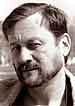
| Author Profile: Michael Bronski |
|
Michael Bronski is the author of
Culture Clash: The Making of Gay
Sensibility and The Pleasure
Principle: Sex, Backlash, and the
Struggle for Gay Freedom. He writes
frequently on sex, books, movies, and
culture, and lives in Cambridge,
Massachusetts. |
| Email: |
mabronski@aol.com |
You are not logged in.
No comments yet, but
click here to be the first to comment on this
Book Review!
|