|
 |
Not just a lit-wit
By
Michael Bronski
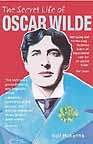
The Secret Life of Oscar Wilde
by Neil McKenna
Basic Books
How to order
Oscar Wilde would have loved it-- being reinvented that is. In his short life-- he lived from 1856 to 1900-- Wilde was a self-declared genius at self-invention. He was poet, journalist, social reformer, socialist, playwright, wit, essayist, and-- in his most notorious self-invention--
public homosexual. So public, in fact, that at the height of his fame (just after the huge success of
The Importance of Being Earnest) Wilde was arrested and convicted for "gross indecency," sentenced to two years in prison, and then went into exile where he died three years later.
Since the 1950s there's been an outpouring of Wilde scholarship-- in the past decade, alone, three dozen major works dealing with everything from Wilde as an Irish writer to his key place in the art-for-art's-sake revolution-- but the amazing thing is that hardly any of
these books take Wilde's homosexuality seriously. Sure, they all mention it-- they have to. And even the better work, such as Richard Ellman's 1984 major critical biography, are very problematic about Wilde's sexuality-- at best they see it as a tragic flaw that brought down a great
writer; at worst they see it as pathology that ends in self-inflicted tragedy.
Now Neil McKenna's The Secret Life of Oscar
Wilde-- which has been out in Great Britain for a year and is just about to be published in the US-- has put an end to all that. The genius of McKenna's book is that-- for the contemporary reader-- he reinvents Wilde as the
flagrant, determined, and highly politicized homosexual that he was. (As I said, Wilde would have loved it.)
There are so many great things about The Secret Life of Oscar
Wilde it's difficult to know where to begin. What McKenna has done-- and this is a brilliant, radical move in Wilde scholarship-- is to take as his premise that Wilde's homosexuality was integral to his
physical, emotional, intellectual, and political life. When it is neither "tragic flaw" nor mental illness, the playwright's sexuality becomes the key to not only his work, but his actions as well. What makes McKenna's research so different from what has come before is that he has situated
Wilde in the broad, comprehensive tapestry of gay life in England in the second half of the 19th century. This is exactly what most past biographers have failed to do-- the two exceptions are Neil Bartlett in his 1988
Who Was That Man? A Present for Mr. Oscar
Wilde and Gary Schmidgall in his 1994 The Stranger
Wilde-- and why they always end up presenting Wide as a disturbed, mostly closeted homosexual bent on self-destruction.
Using as his premise the idea that Wilde's gayness was a vital part of his life, McKenna has done incredible research to sketch out for us the world in which he lived. By relying on the writings of many of Wilde's homosexual contemporaries-- John Gray, Andrew Rafflovich,
Robert Ross-- and by looking at the slowly, but steadily emerging homosexual subculture of late Victorian London, McKenna has found the key to rereading much of Wilde's own writings-- and actions. So, for example, McKenna's re-reading of
The Picture of Dorian Gray (whose title
character was based, in large part, on John Gray-- a completely
obvious fact that most biographers have ignored) brings the essential homosexuality of the piece to the foreground rather then leaving it as barely noticeable subtext. McKenna points out that while Dorian Gray may get his
last name from a friend, his first name is a clear reference to the Dorians-- a tribe in Attic Greece that scholars believe was most responsible for the institutionalization of
paiderastia, "by which an older man became the lover and teacher of a youth." McKenna also quotes John
Addington Symonds's A Problem in Greek
Ethics to support his interpretation, and also discourses, quite fruitfully, on how the act of anal sodomy plays such an important, creative part in the novel as well as Wilde's own sexual imagination.
The Secret Life of Oscar Wilde is filled with such insights, including the "hidden"-- well, for those in the know, hardly hidden at all-- gay themes in
The Importance of Being Earnest. Not only was its very title a play on
Love in Earnest, a popular volume on Uranian poetry,
but the play's obsession with eating and drinking corresponds to Wilde and his friends' sexual habits, in particular the wining-and-dining of young working-class youths. And the French
uraniste-- a homonym of "earnest"-- was for a short time a coded signifier of homosexual desire:
"Are you earnest?" functioned as an earlier form of "Are you a friend of Dorothy's?"
But McKenna's boldest, and most important, claim here is that Oscar Wilde understood himself to be not just a homosexual, but a crusader for the new (albeit very quiet) movement for homosexual visibility and the abolishment of laws and regulations that penalized
homosexual behavior. And this makes perfect sense-- homosexuality was vital to Wilde's identity and his impulses to social justice and personal freedoms. One of the great mysteries of Wilde's life is why-- after receiving news that he was to be arrested for his sexual activities-- he never
fled to France where he would have been safe. Most biographers, including Ellman, chalk this up to arrogance or a desire for self-destruction. McKenna argues that staying in England was an overt political move on the part of Wilde. He was not going to back down, but take the stand
and defend not only his life, but the goodness and the intrinsic political worth of homosexuality.
It is here that McKenna's Wilde becomes not the tragic gay martyr, but the fearless (and perhaps foolhardy) political activist.
This is a biographical re- invention of which Wilde would have been proud.
| Author Profile: Michael Bronski |
|
Michael Bronski is the author of
Culture Clash: The Making of Gay
Sensibility and The Pleasure
Principle: Sex, Backlash, and the
Struggle for Gay Freedom. He writes
frequently on sex, books, movies, and
culture, and lives in Cambridge,
Massachusetts. |
| Email: |
mabronski@aol.com |
You are not logged in.
No comments yet, but
click here to be the first to comment on this
Book Review!
|