|
|
 |
Queers in service to militarism
By
Michael Bronski
Mulan
Animated feature from Walt Disney Studios; Tony Bancroft and Barry Cook, directors; with voices of Ming-Na Wen, Lea Salonga, Eddie Murphy, B.D. Wong, Donny Osmond, Harvey Fierstein, Pat Morita, Miguel Ferrer, James Sigeta, and George Takei.
How to order
Could this be true? Disney Studios was becoming so
au courant that this summer's big animated feature-- which usually makes big bucks for Walt and Mickey-- featured a cross-dresser? Has transvestism become
so fashionable that now it's being peddled to innocent tots under the guise of entertainment?
Not quite. This summer's Disney animation epic is
Mulan, a traditional Chinese legend (based vaguely on even vaguer fact), in which a Chinese village maiden joins the army dressed as a man to save
her elderly father from fighting, and in the end, saves the country. While the film has a little male transvestism, it's just for laughs. The bottom line:
Mulan is not very threatening at all.
Disney has put a feminist and anti-sexist spin in the film's marketing. Girls are the target audience for Disney animation flicks. Disney cartoon heroines are traditionally passive, silly dopes: Snow
White, Sleeping Beauty, Cinderella, Lady, Wendy. This doesn't play well anymore. So beginning with Beauty-- in
Beauty and the Beast-- the new Disney heroine is smart, plucky, energetic, knows her own mind, and usually
takes some sort of political action. Think of Arial in
The Little Mermaid, Pocohantas, Esmeralda in
The Hunchback of Notre Dame, and now Mulan-- who is ostensibly (because of cross-dressing and battle skills) the most daring
of all Disney girls.
But how far can you go with this? The execs at Disney are no fools. Cross-dressing may be trendy, but middle-America is not going to send their children to a film that crosses too many cultural boundaries.
Just last year, The Hunchback of Notre Dame-- with its heavy emphasis on the evils of sexual repression and its forthright anti-racism-- was a box-office flop.
Mulan had to be trendy but not transgressive, cutting-edge
without drawing blood. In this it succeeds.
When the Huns invade China-- led by the ferocious Khan-- the Emperor calls all of the country's men to the army. Fa Zhou is too weak, so his daughter Mulan-- who is too spirited to fit into the proper
feminine mold and find a husband-- takes his place. She gets help from Mushu, an incompetent, street-smart, jive-talking ancestral dragon (the voice of Eddie Murphy). Disguising herself as a man, Mulan musters boot camp
and makes friends with three men who are also misfits: Chien-Po, Yao, and Ling (whose voice is unmistakably Harvey Fierstein's). At the same time, she begins to fall in love with General Shang (B.D. Wong speaking;
Donnie Osmond singing), a typical Disney hunk. The Huns seem unstoppable, but at a crucial battle Mulan-- through tactical ingenuity rather then brawn (she sets off an avalanche that buries the invading army) saves the day, as
well as Shang's life. But her disguise is discovered and while the imposturing calls for death, Shang (who supports the death penalty) pardons her in a life-for-a-life deal. Meanwhile, while the Chinese think the war is over,
Khan and a few top-soldiers infiltrate the forbidden city and hold the Emperor hostage. Mulan once again saves the day (by putting her misfit friends in drag; don't ask) and Shang kills Khan. The Emperor asks Mulan to be on
his Imperial Governing Council but she declines and goes back to her family and village and-- you got it-- begin dating Shang, who now respects her.
Disney promotes Mulan as a derring-do adventure for girls, but the story itself betrays the most conservative, if not reactionary, politics. The film is infused with an intense, ugly dedication to militarism
and nationalism-- so much so that its very notions of "masculinity" are bound to be regressive and dead-ended. When given the chance to actually take a position of power in running the country, Mulan opts for the simple life of
a village wife. What's next: Mulan II: The Footbinding
Years? It's no accident that in pre-production, the working title of the film was
China Doll. In the end Mulan is really not much more then a cross-dressing
Snow White, with a smart-assed dragon and slightly more sense of adventure.
| Author Profile: Michael Bronski |
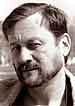
|
Michael Bronski is the author of
Culture Clash: The Making of Gay
Sensibility and The Pleasure
Principle: Sex, Backlash, and the
Struggle for Gay Freedom. He writes
frequently on sex, books, movies, and
culture, and lives in Cambridge,
Massachusetts. |
| Email: |
mabronski@aol.com |
You are not logged in.
No comments yet, but
click here to be the first to comment on this
Queer n There!
|