Helped write the source code of the 1960s
|
 |
An appreciation
By
Mitzel
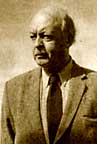
Jonathan Williams died March 16 in Highlands, North Carolina. Thomas Meyer, his partner for more than four decades, said the cause of death was pneumonia. Williams was 79.
I had known Jonathan Williams since the 1980s. During his visits to Boston, he'd occasionally visit at the bookshop; we'd go for a drink and have a long chat. Jonathan knew the majority of creative people of his
generation. He was born in North Carolina, an only child. Later the family moved to Washington, D.C. He attended St. Alban's school; he was a freshman there when Gore Vidal was a senior. He attended Princeton for one year
before dropping out. After college, he did independent studies in book design, photography, painting and the graphic arts. These, among others, remained the passions for the rest of his life.
H
e did a stint at the Chicago Institute of Design and followed that with studies at Black Mountain College where, like John Wieners and others, he came under the influence of Charles Olson. While at Black Mountain,
he established Jargon Society Press. As Jeffrey Beam noted in his recollection of Williams, "Ultimately Jargon -- along with New Directions, Grove and City Lights -- became one of the four most famous small presses of
a burgeoning 1960s movement that continues not only on the printed page, but today, even on the Internet."
Poets and photographers published by Jargon read like a
Who's Who of alternative and/or avant-garde talent. Williams, himself, was author of over one hundred titles,
Williams was a big guy, over six feet, and sported a distinguished look. He had, when he wanted, a stentorian voice. He didn't like fakery in the arts. He had the gift to cover all the bases, a man who could be the
perfectly refined gentleman, while maintaining an appreciation of life's bawdy side. Being of the South, Williams knew its history and did so much to celebrate its bright spots. Williams, according to Jeffrey Beam, was drawn to
the rural, the offbeat, something not-New York, and made his commitment "more and more away from the High Art of the city." Beam has even a more dramatic quote: "Known for his irascibility and opinions, [Williams]
once stated (quoting Henry Miller paraphrasing Celine) 'One of the things Jargon is devoted to is an attack on urban culture. We piss on it all from a considerable height.'"
It was not easy work. Keeping a small press alive takes energy and cleverness. Williams got his various grants over the years, but still had to rattle the cup. Jargon's list, though smart, beautifully done, and
terribly important, was a hard sell. Williams would get in his compact car, loaded up with product and hand-sell them to booksellers. It sounds romantic, but it ain't.
His obits recount the famous story wherein Allen Ginsberg offered Jargon the rights to print
Howl. Jonathan turned him down. His line: if Jargon had published it,
Howl would have only sold 500 copies and, thus, been
swept into the poetry graveyard, a vast expanse. Instead,
Howl went to City Lights, and Howl has sold hundreds of thousands of copies over these 50 years. With the right alignment of stars, you can get that brass ring.
Beasty treats
Jargon did have its moment of media celebrity. Williams, true to his pursuit of the off-beat, signed Ernest Mickler to a contract. The book came out under the title
White Trash Cooking. Mickler had shopped his book
around New York publishers. They all declined unless Mickler changed his title to something more genteel. Mickler stuck by his guns. Williams had no problem with the title. The book was one odd item. It featured recipes
from Mickler's table: cooter pie, okra, and other delicacies. My favorites included potato chip sandwiches and pork-fried beef. Like any good cookbook, the title featured gorgeous photos of the delicacies presented. The
press went crazy over the book and it became a hit, even winding up on the
New York Times bestseller list, imagine that. Williams quickly sold the reprint rights.
Jonathan Williams was in Boston one night in the 1970s, starring at a poetry reading, organized by the Good Gay Poets, at the late and lamented Charles Street Meeting House. It was a slim crowd, as usually happens
with such events. I was not in attendance that night, but my dear friend Charley Shively was and he recounted the event for me. Just as Williams was beginning to read, this big, butch number, dressed in leathers, noisily
came into the temple and sat down. Jonathan read and carried on a bit, and the leather number finally figured out the milieu, and stood up and screamed: "What you all are doing is a sin in the eyes of God!"
Williams didn't miss a beat. He said: "Honey, to quote Mae West, if your cock is as big as your mouth, meet me after the show!" The leather evangel fled. And Williams carried on and on. He was a great engine. I miss him.
You are not logged in.
No comments yet, but
click here to be the first to comment on this
Common Sense!
|