By
Bill Andriette
As a young man, the aspiring poet Abu Nuwas sought out Walibah, an established master, known for his blond hair. The two met, and then retired to the older poet's house for a repast.
Poets being what they are, one thing led to another.
"[A]fter they drank and ate," according to the best available account of that evening, "Walibah wanted him. When he disrobed him and saw the beauty of his body, he could not but
kiss him on the anus. Abu Nuwas farted. So he said to him 'What is this, sly boy?' He answered, 'I did not want the known proverb to be lost and not to come true, namely: The penalty for
he who kisses the anus is its farts.'"
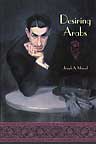
The legend gets recounted in Joseph Massad's fascinating and controversial new book
Desiring Arabs (University of Chicago Press, 453 pages,
$35). The poets' encounter suggests a homoerotics as droll and playful as anything penned by Allen Ginsberg. But Abu Nuwas gained his fame not in 1960s New York but 8th century Baghdad. Abu
Nuwas's poems in celebration of wine and boys echoed through posterity, his name immortalized in
Arabian Nights. The account above comes from a biography written in the 13th century. On
that first evening, it is said, Abu Nuwas's ribald wit impressed Walibah, whose "admiration and love for him grew further." Later Abu Nuwas recalled his mentor: "Oh, what a wonder! A brilliant
poet whom Walibah ibn al-Hubab fucks."
Joseph Massad teaches Arab politics and intellectual history at Columbia University, and his book looks back over what was more than a millennium of homoerotic Arabic poems, in
which Abu Nuwas's name was often invoked. But the tradition faltered in the 19th century, as a new skittishness over same-sex desire settled over Arabic intellectual and religious discussions.
The 13th-century biography was republished in Cairo in 1924 -- and then banned by Egypt's British-mandate government. In 1968, an Egyptian journalist published a book titled
The Confessions of Abu Nuwas. The story of the poet's encounter with his mentor is retold. Only in this rendition, Walibah tries to rape Abu Nuwas at dagger-point and the young poet chooses death
over submission.
In part to find out how 9th-century flirting became 20th-century rape, Massad focuses on the last 150 years of Arabic writings that touch on same-sex desire -- from literary
criticism to memoirs, travelogues to a sex manual, novels to police reports.
There's a whole bookshelf on homosexuality and Islam. Yet now there's almost a fatwa on the head of the Columbia professor -- put there not by uptight imams but in the name
of outraged gays. Why the controversy over his work?
The colon-ized take it up the ass
Massad's overarching theme is that Europe's encroachment on the Middle East -- Napoleon's aborted invasion of Egypt in 1798 is the opening salvo -- poured acid rain on the
Arabs' literary legacy of same-sex eros. Western conquest has had that unsavory effect, Massad contends, whether the interlopers were Victorian-era colonial administrators, European
scholars unearthing and systematizing ancient Arabic texts, gay tourists on sexcapades, or Western human-rights groups and the gay campaigners that he contemptuously dubs the "Gay
International." Indeed, these latter Massad accuses of being a sometimes witting tool of Western imperialism. Moreover, he says, they do no favors for erotic freedom in the Middle East.
With a steady drumbeat of bad news coming out of the region, Massad's accusation leaves some gay activists smarting. In the past few months alone, Kuwait has launched a
campaign against cross-dressers, Cairo has put eight men up on charges of "habitual debauchery," and Iran has executed a 20-year-old on (recanted) accusations of forced sex with other boys
when he himself was 13.
Groups such as Human Rights Watch and the International Gay and Lesbian Human Rights Commission (both based in New York) have taken the lead in documenting and publicizing
these cases. Massad hits at the gay movement just where it would seem the most selfless -- not fighting at home for marriage or pension rights but working abroad for the benefit of, as
such groups put it, less privileged GLBT people who have no voice.
An Uzi in your pocket?
Even before Desiring Arabs, Joseph Massad was already Columbia's most controversial professor. He's been the target of a national campaign -- led by Zionist groups such as
Campus Watch and the David Project -- that seeks to have him fired. In 2002 a student accused Massad of responding harshly to a comment she made in class. The administration set up a
faculty panel to investigate. In a documentary,
Columbia Unbecoming, another student contends that Massad taught that the root of "Zionism" is "zayin" -- Hebrew slang for "penis."
Massad disputes the charges. The shared root he was calling attention to was between "zayin" and the Hebrew word for weapon, he says, and had nothing to do with the etymology
of "Zionism." And the other accusations have not come to much. In March 2005, the panel decided he had "responded heatedly" in a way that "exceeded commonly accepted bounds,"
though testimony from students who witnessed the exchange came down 20-to-two in his favor.
In any case. a controversy over classroom manners seems a bit rich given the standards of politesse Columbia establishes at the top: in introducing Iranian president
Mahmoud Ahmadinejad last September, university president Lee Bollinger called the Iranian leader to his face "a petty and cruel dictator." With the question of Massad's tenure still hanging,
outside pressure continues. A November 20 New York
Post op-ed piece titled "Hatemonger U" urged Columbia to fire the professor. "After 9/11, we simply can't leave Middle East studies
to partisans," declared Richard Miniter.
For other reasons, some gay activists have agreed.
In that speech at Columbia, Ahmadinejad had declared, "In Iran, we don't have homosexuals like in your country" -- which, depending on what "like" means, could be partly true.
Writing in the New Republic, James Kirchik accused Ahmadinejad of intending that claim in its widest and absurdest sense, and imagined that Massad was in the audience nodding right
along. "Massad's intellectual project," Kirchik said, "is a not-so-tacit apology for the oppression of people who identify openly as homosexual. In so doing, he sides with Islamist regimes over
Islamic liberals."
Wayne Besen, a former spokesman for the Human Rights Campaign, was harsher, calling on Columbia to cast out "a dangerous ideologue [who] is part of a larger movement to
justify the brutal repression and murder of gay people in the Middle East."
Dark and degenerate
Massad would seem hard to cast in the role of PR man for Islamic fundamentalism. He's a leftish academic whose background is Palestinian Christian -- like that of Edward Said,
Massad's mentor. Desiring Arabs is dedicated to Said, who died in 2003 and also taught at Columbia. Said's work focused on how colonialization dehumanizes its subjects. He's best known for
his 1978 book Orientalism. The title word gestures at a stylized Western view of the East: as exotic, timeless, backward, cruel, readily generalized, and needing stern Occidental discipline.
Orientalism's cover showed an 1870 painting by Jean-Léon Gérôme of a nude boy, a serpent entwining his body, and an elderly snake charmer at his side. Miscellaneous
disheveled natives lie crumpled against a wall watching enrapt. It's a charged image of illicit desire, which Gérôme simultaneously indulges, rejects, and projects onto degenerate Arabs. Said's book
in fact dealt little with questions of eroticism. Massad's new work unpacks
Orientalism's promise of a sexual critique of colonialism.
Massad contends metaphors of sex and degeneracy shaped Europe's encounter with Islam, all beamed through the lens of social Darwinism. As well, these metaphors
increasingly focused Arab self-perception. In 1886, Jamal al-Din al-Afghani -- deemed the father of Islamic modernism -- embraced the notion that the Muslim world was for now lower on the
evolutionary scale, but looked forward to its "breaking its bonds and marching resolutely in the path of Western society."
The Ottoman Empire was famously called "the sick man of Europe." Massad argues that the Ottomans and their Arab subjects were, to Western eyes, "queer" as well. That is, they
were seen in their foreignness in the way sex deviants at home were cast as radically "other." Muslims were queer, Massad shows, in the ripest Freudian terms, which would paint
homosexuality as regressed, neurotic, narcissistic, and unevolved. It's a self-perception secular Arab thinkers have also taken to heart, especially after the 1967 war with Israel, and the dream of
Arab nationalism that defeat helped shatter. In a whirlwind tour of recent Arab intellectual history, Massad shows Arab social critics sounding like homosexuals undergoing 1950s-era
psychoanalysis. They bemoan their societies' "arrested development," "lack of evolution," psychological "regression," and a "failure to go through successive stages."
Before Europeans had conquered minds as well as territory, Massad suggests, Arabs had not felt so bound to such a dispiriting conceptual framework (see sidebar).
Beauty veiled
But it's not for rummaging through the archives of Arabic literature that's getting Massad in trouble with gays. It's his contention that when Western gay groups mess around in
Muslim societies' affairs, they're like colonizing missionaries, fired by moral superiority and a keen sense of White Man's Burden.
Massad is working against the grain of Arabs who have, in some cases, pinned their own stripe onto the rainbow flag. The Gay and Lesbian Arabic Society (Glas.org), for example,
was established in 1988 and claims chapters in New York, Los Angeles, Beirut, and Cairo.
"Since the concept of same-sex relations does not exist in the Arab world, being 'gay' is still considered to be sexual behavior," asserts Ramzi Zakharia, GLAS's outreach director.
"Just because you sleep with a member of the same sex does not mean you are gay. Once a relationship develops beyond sex (i.e., love), this is when the term 'gay' applies."
Massad does not dispute that some Arabs embrace gay identity. But he contends they hail from the increasingly westernized elites. "They remain a minuscule minority among those
men who engage in same-sex relations and who do not identify as 'gay' nor express a need for gay politics," Massad argues. The evidence, he suggests, includes Zakharia's care in
distinguishing "gay love" from "gay sex," pointing to a world where same-sex activity is a commonplace without name or label.
"According to Western press accounts, most men and women who seek same-sex contact in Saudi Arabia," notes Massad, citing the extreme case of the Islam's most
puritanical country, "are very successful at it and don't seem to be harassed." It's a seeming contradiction that, lately, has received a lot of notice (see "Arabian Nights,"
The Guide, July 2007).
In part what permits the impossible is a general reserve that Islam encourages in matters of the body. Etiquette frowns on strutting naked around a hammam in Fez. By
contrast, consider the American locker room.
"Men can stand naked in front of one another and speak about politics and jobs," Massad says, "while making sure, of course, that their gaze stays at eye level." It's as if, he
adds, heterosexuality is assured by solid-gold genetics that no circumstance can trump. "In Arab countries -- and in many other cultures -- nudity is frowned upon because it's seen as seductive
and productive of desire. So there's a recognition that the desire exists and that it's natural."
Even if recognition doesn't mean embrace, Islam isn't inconsistent: heterosexual desire is treated with the same reserve.
Other factors that help preserve a space for same-sex practice in the Muslim context include the non-equation of desire with identity, a regard for privacy, and veiling of sex's
public expression. There's compensation for this in part by something that still surprises Western visitors to Muslim lands: a ready acceptance of same-sex public affection, with men or boys
who are friends walking everywhere arm in arm.
Riverboat aflame
But what happens when silence breaks down into noise?
Massad deconstructs the 2001 Queen Boat incident in Egypt -- perhaps the most notorious Arab anti-gay crackdown. On May 11 of that year, Cairo police arrested 55 men in and
around the Queen Boat, a floating disco docked on the Nile in an upscale neighborhood. Women and Western tourists were released immediately, with three sons of prominent families let go
shortly after. Prosecutors charged 52 men, who were claimed to be members of an Abu Nuwas "cult." The alleged crime was not homosexuality (which is not itself illegal) but "offending
religion." A year later, 23 were tried and convicted in a special state-security court normally reserved for cases against Islamists. The men were sentenced to between one and five years, often at
hard labor.
The case became an international cause
célèbre. Openly-gay U.S. Representative Barney Frank helped rally members of Congress to threaten a cut-off of the annual billions of dollars
in U.S. aid to Egypt unless the men were released. Western diplomats and media, Massad notes, are "usually silent about most human rights abuses in Egypt, as well as the poverty that
afflicts the country." But Westerners attended the Queen Boat trials in force, and publicly expressed their horror at the proceedings.
Seen through the lens of domestic Egyptian politics, Massad contends, that horror was turned on its head.
The Egyptian regime enjoys little legitimacy at home and stays in power through rigged elections, U.S. aid, and an iron fist. As in many societies where opposition is criminalized,
dissent takes a religious cover. In Egypt, that's in the form of the outlawed Muslim Brotherhood. The U.S. pays for Egypt's undemocratic ruling elite and heavy hand in part because it keeps
Islamic fundamentalists at bay.
Impoverished Egyptians suffer the consequences. It's their sons who are suspect as Brotherhood conspirators. As a result, they bear the brunt of not infrequent mass arrests
(especially before elections), and who suffer torture, trials, and imprisonment -- meted out in the special security courts that handled the Queen Boat defendants.
The U.S. underwrites Egypt's torture apparatus as part of its war on terror. So some Arab eyes rolled when Scott Long, Human Rights Watch's point man on gay issues, demanded
in 2004 that the U.S. institute a GLBT sensitivity component in its training programs for Egyptian police.
Even if it caused static with Egypt's American paymaster, the Queen Boat prosecution marked the Egyptian government's discovery that fomenting anti-homosexual hysteria is a
game at which it can only win.
The prosecutions coopted the opposition's theme of Islamic probity while appealing to class resentments. The defendants were an economic cut above -- with many of them
tracked by the trail they left on the internet at the English-language Gayegypt.com. Getting online in English is something, of course, beyond the wherewithal of Cairo slum-dwellers. The Queen
Boat prosecution gave the illusion that the ruling elite was keeping its house in order -- even if well-connected arrestees were quickly released. And it showed the hated security courts being
used for something other than harassing the angry poor.
Egypt's client relationship to America is a symbol of the country's emasculation. That the Americans could be rebuffed in the name of national honor made the moment even
more perfect.
"During the hearings," notes Massad, "the prosecution frequently referenced the Gay International campaign, pledged to defend the 'manhood' of Egypt against attempts to
'violate' it, and wondered what would become of a nation who sits by idly as its 'men become like its women' through 'deviance.'"
Seeing the traction they were gaining, authorities upped the ante. "The press and conservative Islamists soon began to call for explicit laws criminalizing same-sex practice," he
adds. A wave of further arrests followed.
The response from the West was "largely responsible for the intensity of this repressive campaign," Massad contends. "Despite the overwhelming evidence that gayness, as a
choice, is proving to bring about more repression, not 'liberation,' and less sexual freedom rather than more for Arab men practicing same-sex contact, the Gay International is undeterred in
its missionary campaign."
For an interview with Joseph Massad, click here.
For a sidebar on same-sex relations in the Arab world, click here.
| Author Profile: Bill Andriette |
| Bill Andriette is features editor of
The Guide |
| Email: |
theguide@guidemag.com |
You are not logged in.
No comments yet, but
click here to be the first to comment on this
Magazine Article!
|





 Advertise with us
Subscriptions
Contact us
Site map
Translate
Advertise with us
Subscriptions
Contact us
Site map
Translate