|
 |
Arabs and same-sex relations
By
Bill Andriette
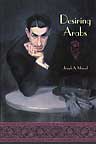
Arab cultural self-confidence took a hit when Western colonizers replaced the Ottomans. But, Joseph Massad suggests in his new book Desiring Arabs, that in itself didn't change the
ample space for same-sex relations that Arab societies often allow.
An Egyptian chronicler of Napoleon's 1798 invasion -- one of the first European forays into the Middle East since the Crusades -- wrote about being impressed with French
scientific interests, but was hardly wowed by a more personal measure of their civilization. "Whenever a Frenchman has to perform an act of nature he does so, wherever he happens to be, even
in full view of people, and he goes away as he is, without washing his private parts after defecation," noted Abd al-Rahman al-Jabarti. "If he is a man of taste and refinement he wipes
himself with whatever he finds, even with a paper with writing on it; otherwise he remains as he is."
A Moroccan writer touring France in 1845 wrote with disgust about streets flowing with men's piss. He also expressed with surprise that, "for them, only flirtation, rhapsody,
and courtship with women exist, for they are not inclined toward young men and juveniles, as for them this is a great shame and merits punishment, even though it be with mutual consent."
From luscious anuses to memory holes
But increasingly, the elite Arab who got to tour Europe found its censure of same-sex doings admirably modern. Egyptian al-Tahtawi called it "one of the better things among
their traits." Western-introduced printing and an onslaught of Orientalist scholarship meant more historic Arabic literature was published and exposed to a wider readership. But it also meant
new pressure to censor what, in the light of European opinion, now felt unseemly. Compilations of Abu Nuwas's poetry would now be printed with the boy-love poems removed. (Censorship
which continues: In 2001 the Egyptian Ministry of Culture blocked the planned publication of the poet's complete extant works.) An academic debate ensued in Arabic as to whether the
poet's depravity had roots in a wearying surfeit of dancing girls in Abbasid Baghdad, the poet's Persian blood, or his absent father.
But these intellectual discussions didn't exactly transform ordinary life, even at the upper echelons where they raged. The major 20th-century Egyptian writer Taha Husayn
remembered his schooldays at Cairo's elite al-Azhar University at the turn of the century. Some of his fellow students were conservative, he wrote, but others ("more fortunate") were "renewers"
or "Nuwasites." For these "readers of the poetry of Abu Nuwas and his companions," it "was not prohibited for them to encounter beautiful faces inside and outside of al-Azhar."
Or, perhaps, to encounter them in their beds. Massad writes:
"Husayn had one more reference to same-sex practice when he was at al-Azhar at the age of 13 (in 1902), namely, in reference to a young man dubbed 'Abu Tartur,' who was said
to pay periodic nocturnal visits to the apartment of al-Azhar students (who were invariably a few years older than Husayn). The young man would slip into their beds and assume the
passive position in coitus with them. While Husayn refrained from any graphic description of what actually transpired under the bed covers, he would explain how the young men would have to
get up afterwards and bathe, which was an arduous task in winter for lack of hot water in the apartments. The young men would from time to time speak about Abu Tartur in 'quick
furtive whispers followed by quick chuckles interrupted by shyness and reserve.' Abu Tartur would choose a different student each time. It is unclear and perhaps unlikely that he visited the
young Taha, even though the latter would 'reflect' upon what the young men would say about Abu Tartur."
For an essay on Joseph Massad's Desiring Arabs, click here.
For an interview with Joseph Massad, click here.
| Author Profile: Bill Andriette |
| Bill Andriette is features editor of
The Guide |
| Email: |
theguide@guidemag.com |
You are not logged in.
No comments yet, but
click here to be the first to comment on this
Magazine Article!
|