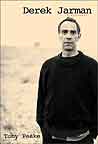
You saw the films; here's the book!
|
 |
British filmmaker Derek Jarman didn't sell out
By
Michael Bronski
Derek Jarman: A Biography
by Tony Peake
Overlook Press
How to order
In 1986, at the height of his career, Derek Jarman was rigorously denounced by the queen of British
right-wing censors, Mary Whitehead, for promoting homosexuality and violence after his films
Jubliee and Sebastiane were shown on the Britain's Channel 4. Of course, Jarman was a queen himself-- and a radical,
experimental filmmaker as well-- so Whitehead's critiques were not off-target. Her attacks were emblematic of Jarman's
role as a radical artist and sexual provocateur, from the beginning of his career in the late 1960s to his death
from AIDS in 1994. More than any other British or American independent filmmaker, Jarman's vision was a
dedicated, agitating, perversely merry wedding of art and politics and poetics.
Tony Peake's biography Derek
Jarman (Overlook Press, cloth, 613 pages,
$40) details the artist's life-- from his early youth to his final days as an AIDS activist-- and shows the seamless connection between
his everyday existence and his art. Born to middle-class parents with a father in the Royal Air Force, Jarman
spent his youth abroad and in boarding schools, where he became aware of both homosexuality and his talents.
Early efforts at theater design and conceptual art led to working with Ken Russell on
The Devils. Then began a brilliant and controversial film career, starting with
Sebastiane-- an erotic retelling of the early (and very
naked) Christian martyr, filmed entirely in Latin. There followed Jarman's indictment Great Britain's political
corruption in Jubilee, and his homoerotic biographical retellings of the lives of
Caravaggio and Edward II. Jarman combined his politics with a camp sensibility and highly aestheticized visuals. The result was a body of
work that defined a 20th-century homosexual experimental aesthetic.
Tony Peake, who was Jarman's literary agent, deftly weaves together the many facets of his
subject's enormous output-- Jarmen was a director, designer, painter, sculptor, and writer as well as a filmmaker--
with the intricacies his life, public and private. He also traces Jarman's own journey through gay public life.
Although he was openly gay and out early in his career, Jarman was usually on the fringes of the gay movement,
often claiming that he did not want his work guided by an over-articulated identity-politic. With his AIDS diagnosis
in 1987, Jarman began protesting anti-gay and AIDS policies in the UK both on the streets and in his work.
His dedication to both his work and politics often led to controversy, such as his attack on Ian McKellen for
accepting knighthood from, what most gay people agreed was, a palpably anti-gay government.
It was this unblinking political determination which also fueled Jarman's work-- particularly his
last film, Blue that dealt with his illness.
Peake has written a graceful, intelligent biography that tells us as much about the effect of the
artist's world upon his work as it does of his effect in that world.
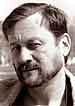
| Author Profile: Michael Bronski |
|
Michael Bronski is the author of
Culture Clash: The Making of Gay
Sensibility and The Pleasure
Principle: Sex, Backlash, and the
Struggle for Gay Freedom. He writes
frequently on sex, books, movies, and
culture, and lives in Cambridge,
Massachusetts. |
| Email: |
mabronski@aol.com |
You are not logged in.
No comments yet, but
click here to be the first to comment on this
Book Review!
|