December 2004 Cover
|
 |
Can secret agent save queerdom?
By
Michael Bronski
That Man From Camp
Three novels by Victor Banis
Harrington Park
Press
How to order
The republication of three of Victor Banis's classic pulp camp
classics from his 1960s "Man from C.A.M.P" series is a cause for endless delight. Beginning in 1966, Victor Banis-- under the pseudonym Don Holliday-- began publishing a series of nine novels that featured Jackie Holmes, a queer mixture of an
effeminate queen crossed with a shrewd, determined, butch man-of-action, as well as a great lover. Holmes worked for C.A.M.P.-- a secret organization whose mission is to protect homosexuals. Banis's titles were, well, perfect for his style and vision:
Color Him Gay, Gothic Gaye, Rally Round the Fag. Blow the Man Down.
"The Man from C.A.M.P." series was a huge success. It was a funny, queer parody of several items of pop culture, and also tapped into the ever-growing homophile movement. The homophile groups of the 1950s and 1960s expressed a range of political views.
These ranged from a fairly conservative belief that safety for homosexuals depended on a mixture of privacy, discretion, and exemplary behavior, to a more proactive stance that included challenging legal discrimination, promoting public education, and building political networks.
The fantasy that drives Holliday's The Man From C.A.M.P.
series goes several steps further. It was, of course, a parody of the 1960s television
hit The Man From U.N.C.L.E. (itself a parody of James Bond thrillers). "U.N.C.L.E." stood for "United National Command for
Law Enforcement," and was a group dedicated to bringing justice to the world. Their main enemy was T.H.U.S.H.-- "Technical Hierarchy for the Removal of Undesirables and the Subjugation of Humanity"-- a group that generated endless plans to bring about world destruction.
In Holliday's parody, C.A.M.P is a "world-wide, super-secret organization... dedicated to the protection and advancement of homosexuals. Special branches devoted their attention to improving the lot of the homosexual legally. Others worked with the tools of psychology,
science, the arts... The police branch... was simply to protect the homosexual in whatever way possible, protect him from violence, mistreatment, blackmail, sometimes murder. As a person outside the law, the homosexual was often a victim of ruthless fiends who preyed upon
his helplessness."
C.A.M.P.'s arch enemy is B.U.T.C.H (Brothers United to Crush Homosexuality), an underground organization whose "goal is the harassment and destruction of homosexuals everywhere [using] every form of vice and crime as tools, from dope to murder."
B.U.T.C.H.'s emblem is a vicious whip curled around a black boot.
At first glace, Holliday's C.A.M.P. series seems to be merely a neat commercial parody-- one of many such. At a time when the older image of the "queen" was being frowned upon as stereotypical and unsexual, C.A.M.P. operative Jackie Holmes was both a
flamboyant queen and a great lover, a sexual Casanova. Decent and trustworthy, homosexuality is defined here not as masculine-- B.U.T.C.H. is, after all, the enemy of all gay people-- but as overtly and obviously gay. Holliday's subversion, however, goes deeper than that.
The Man from U.N.C.L.E was clearly a product of the cold war (although the show itself was careful to avoid any signs of specific US nationalism or anti-Soviet sentiment in its scripts) and Holliday has adapted this paradigm of ideological warfare, foundational to postwar thinking, and recast
it as a battle between homosexuals and queer-haters.
The C.A.M.P. books have, essentially, been lost for decades. They were available-- often for very high prices-- on Ebay or in used book stores that specialized in queer collectibles. This new collection-- including three of the best novels with an introduction by and
an interview with Banis and editorial notes by Fabio Cleto-- is the perfect introduction to the series.
Banis-- who lives in San Francisco today-- was a highly prolific author. He has written gothic and pulp novels under the names Lynn Benedict and Jan Alexander. As Victor Jay, he published
A Gay Haunt with the Travelers's Companion series (an imprint of Olympia
Press). And under the name Don Holliday he published 16 gay-themed pulp books, nine of them in The Man from C.A.M.P. series, including the ancillary
The C.A.M.P. Cookbook, a basic kitchen guide for the queen new to the kitchen.
Read today, Banis's satire is still funny and while the books are not overtly sexual-- this is soft-core 1960s porn (i.e., no real sex at all)-- their sharp observations and their clever writing sustain and move forward a great deal of silly plot. At first glace these novels
seem like period pieces. But not unlike the old Batman television series, between-the-lines radical political intentions become clear. It'd be absurd to make overarching, serious political claims for the C.A.M.P. series-- they were written in less than a week each and published to
make quick money. But reading them now we can clearly see the formation of a clear, anti-homophobic, political agenda and analysis-- at odds with the established homophile politics of the time-- forming years before the gay lib began.
It would be a mistake to read That Man from C.A.M.P.
right on through. The joy is in the sensibility, not a sensible narrative. But taken in measured sittings
The Man from C.A.M.P. is not only a glimpse into gay history and literature, but a great read as well.
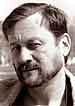
| Author Profile: Michael Bronski |
|
Michael Bronski is the author of
Culture Clash: The Making of Gay
Sensibility and The Pleasure
Principle: Sex, Backlash, and the
Struggle for Gay Freedom. He writes
frequently on sex, books, movies, and
culture, and lives in Cambridge,
Massachusetts. |
| Email: |
mabronski@aol.com |
You are not logged in.
No comments yet, but
click here to be the first to comment on this
Book Review!
|