So long life
|
 |
Surgery by which a great book becomes a popular movie
By
Michael Bronski
The Hours
Directed by Stephen Daldry
Starring
Meryl Streep, Nicole Kidman, Ed Harris
How to order
Stephen Daldry's The Hours, based on the Pulitzer Prize-winning novel by Michael Cunningham, is one of those odd movie quirks-- an art film that goes big-time commercial. The book
tells three interrelated stories, all connected to Virginia Woolf's novel
Mrs. Dalloway. Under normal circumstances the film would have garnered limited mainstream interest. Of course it helps
that the film stars a pantheon of great actresses-- Meryl Streep and Nicole Kidman, among them. But star-power doesn't necessarily correlate to box office. Why is
The Hours so popular?
David Hare's adaptation of Cunningham's novel is extremely viewer-friendly-- maybe too much. Cunningham's book was well-written and crafted and spoke to readers via its
emotional complexity. Hare's screenplay plays up the flashiness of Cunningham's narrative and makes the film somewhat portentous. The Phillip Glass score cueing our feelings doesn't help either.
The film works for audiences-- or doesn't-- by making obvious and insistent Cunningham's nuances.
The novel comprises three separate narratives, and is overshadowed by the image of Virginia Woolf's 1941 suicide. Cunningham examines a single day in the life of three women.
The first is Virginia Woolf (Nicole Kidman), who, in 1923, while battling depression, decides to begin writing
Mrs. Dalloway as she grapples with the way her husband Leonard and sister
Vanessa are treating her "madness." The second story, set in 1951, is about Laura Brown, a pregnant Los Angeles housewife who (while reading Woolf's novel
Mrs. Dalloway) is profoundly unhappy as a wife and mother. On her husband's birthday, she makes a decision to commit suicide and leave behind her son Ritchie. The third story details the life of Clarissa Vaughan, who, like
her namesake Mrs. Dalloway, is giving a party. The modern Clarissa is a lesbian editor living in Greenwich Village with her lover Sally and her daughter Julia and is preparing a celebration for
her best friend (and former lover) Richard Brown, a poet and novelist who has just received a major award and who's dying of AIDS.
Cunningham managed to deftly interweave these three stories into a complete tapestry of existential grief. The actual Virginia Woolf did commit suicide; her earlier incarnation
decides to write a novel; Laura Brown decides to not kill herself, but to find her own life away from her family. Clarissa Vaughan is giving a party to make life more bearable for herself and she
hopes for the dying Richard, who, indeed, does kill himself.
The Hours was potent as literature because it was so minimal, so elusive. David Hare is a great playwright and screenwriter, but his style is quite different from Cunningham's.
Whether it be in his great, underrated
Strapless (1989) the wonderful
Wetherby (1985) or the rarely seen The Secret
Rapture (1993), Hare makes emotional connections obvious-- bringing
them to the surface to make clear, often political, connections. His 1983 film
Plenty, for instance (he also write the play) in which Meryl Streep manages to perfectly embody feminism,
wartime bravery, and the moral hollowness of British postwar politics (particularly Thatcherism) without missing a beat or seeming didactic.
The problem-- and, ironically the salvation
of-- The Hours, is that Hare's technique is really antithetical to Cunningham's. Hare works from the outside in, and Cunningham works from
the inside out. The internal emotional maelstroms of the novel are now made clear and explicit in dramatic action on the screen-- which is fine, since it is a movie. But we lose Cunningham's
more delicate touch. And maybe that's the price of turning a finely-wrought novel into a box-office blockbuster.
| Author Profile: Michael Bronski |
|
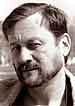
Michael Bronski is the author of
Culture Clash: The Making of Gay
Sensibility and The Pleasure
Principle: Sex, Backlash, and the
Struggle for Gay Freedom. He writes
frequently on sex, books, movies, and
culture, and lives in Cambridge,
Massachusetts. |
| Email: |
mabronski@aol.com |
You are not logged in.
No comments yet, but
click here to be the first to comment on this
Movie Review!
|