|
 |
By
Michael Bronski
Q-Faq
by Tom Bacchus
Haworth Positronic Press
How to order
Forbidden Fruit: Psalms of a Black Master
Will Kane
Kensington
How to order
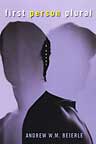
First Person Plural
by Andrew W.M. Beierle
Kensington
How to order
Gay fiction is often described as a genre, but that isn't quite right. Maybe it's more a state of mind, or a reflection of trends in the publishing industry. The origins of this genre (or whatever it is) are traced frequently to 1978. That's when several New York-based
authors, including Edmund White and Andrew Holleran (among the members of the Violet Quill, a group that met occasionally to share their writing), published novels that were greeted by the gay and mainstream press as a new frontier in gay and/or American letters.
Yet distinctly gay-themed fiction was also being published in the 1940s and 1950s, often aimed at a distinctly gay readership.
S
till, since the late 1970s a series of writers and books have gotten grouped into a canon of "gay fiction." Some volumes on that shelf are brilliant
(The Swimming Pool Library) and some are quite third-rate (fill in your own blank). Most gay readers will have their
own list of favorites -- popular titles here
include A Boy's Own Story, Father of Frankenstein, Martin and
John -- and that's great. But what these lists miss is the great deal of popular gay fiction published over the past 30 years that's perfectly literate, fun, accessible,
and highly enjoyable. As Edmund White himself noted in "The Personal is Political: Queer Fiction and Criticism" (in his collection
The Burning Library), the very idea of a canon presumes that an audience will have to read less and less, not -- as any curious person might
-- read more and more.
While Edmund White and David Leavitt have just published new novels
(Hotel de Dream and The Indian Clerk, respectively) widely reviewed in the mainstream press, there are several terrific novels published recently getting less than their due that are also worth
a look.
Tom Bacchus's Q-Faq (Haworth Positronic Press; 203 pages, $12.95) is a science fiction, sexual-liberationist novel about a future society in which a U.S. government run by the Puritan Party is pushing an anti-gay, anti-sex agenda across the divided states of
America. Into this dystopic mess emerge mercenary Aces Bannon and Afaik, a queer Middle Eastern rebel. They join forces and work with a growing underground of political and sexual rebels. This is standard science fiction with a queer slant -- a sexed-up Ursula Le
Guin crossing with all those 1970s erotic comics by Etienne in which men with large dicks trapped in rocket ships or on distant planets fuck their way into cosmic delight.
Bacchus shows total assuredness as a writer even while taking chances with his readers. His earlier works --
Bone and Rahm -- both published as Badboy Books in the 1990s -- were taut, literate erotica.
Q-Faq is stylistically edgy as well. Blending more
traditional narratives with a collage of pamphlets, communiqués, posters, and various other "informational" artifacts, Bacchus constructs a quick-moving story that's something of a cross between
1984 and a collection of Italo Calvino stories. The book isn't perfect -- it's
slightly disorganized and lags a bit toward the end, the author possibly taken a little too much with his own inventiveness. But
Q-Faq is still one of the more intriguing and satisfyingly entertaining books of gay fiction to come out in a while.
A royal we, a cat o' tails
As a précis, the plot of Andrew W.M. Beierle's
First Person Pural (Kensington, 328 pages, $15) is certainly intriguing. The book sustains its promise, while conjuring the feel of a tacky Ed Wood film from the 1950s or a "Saturday Night Live" skit. Owen Jamison is
a perfectly nice, sensitive gay teen whose brother Porter is an extroverted heterosexual. Problem: they are twins who are conjoined, sharing a body, but with two distinctly personalities. Problems keep escalating as Porter, the more sexually outgoing of the
brothers, becomes involved with women, and then marries Faith, a wonderful woman whom he loves. It's when Owen, finally coming into his own sexuality, falls in love with Faith's closeted brother Chase that the situation becomes well, emotionally and physically confusing.
Conjoined-twin scenarios are intrinsically interesting -- playing on the common fantasy of the double and the Doppelganger, the myths of Narcissus and Echo, and plain old prurient curiosity. Exploitation is probably intrinsic to the material -- from the mostly
ludicrous 1951 Chained for Life (which featured real-life conjoined twins, the noted Hilton Sisters) or the more recent and moving 2005
Brothers of the Head (which bears some resemblance to this novel).
First Person Plural benefits from Beierle's matter-of-fact telling of
its story. This is, thankfully, an anti-exploitation novel. Beierle is more interested in the nuances of difference then he is in what happens when two very different brothers share the same penis (though don't worry, he's quite interested in this as well).
First Person Plural is not perfect. There are points where Beierle doesn't quite seem to know where to go with the story -- the set up is so perfect moving the plot along seems to be almost an afterthought at times. At other points his usually forthright, sturdy
prose becomes pedestrian, as though he's really trying to make this material less interesting. But on the whole
First Person Plural is effective. While much gay fiction (including Beierle's first novel, 2002's
The Winter of Our Discothèque, focus on a small range of gay life
-- boy/boy romance, circuit parties, coming of age -- this is a refreshing and rejuvenating break into sheer originality.
Will Kane's Forbidden Fruit: Psalms of a Black
Master (Kensington; 287 pages, $15) is a particularly frisky collection of 20 hard-core erotic stories with an SM slant. The African-American main character shares a fictional name (get it?) with the author, who
contributes to a limited, but growing body of black gay erotic writing. Kane has a strong sense of atmosphere as well as a striking sense of sexual heat. There's not a lot new here -- the stories recall much of the great body of gay SM erotica. But Kane is a good, strong writer
and knows how to tell a tale. There's maybe not the emotional nuance we see in the best of this subgenre (say, the stories and novels of Aaron Travis, all of which are small masterpieces). But there's enough drive and energy here to make
Forbidden Fruit worth reading and getting hot over.
| Author Profile: Michael Bronski |
|
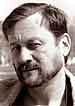
Michael Bronski is the author of
Culture Clash: The Making of Gay
Sensibility and The Pleasure
Principle: Sex, Backlash, and the
Struggle for Gay Freedom. He writes
frequently on sex, books, movies, and
culture, and lives in Cambridge,
Massachusetts. |
| Email: |
mabronski@aol.com |
You are not logged in.
No comments yet, but
click here to be the first to comment on this
Book Review!
|